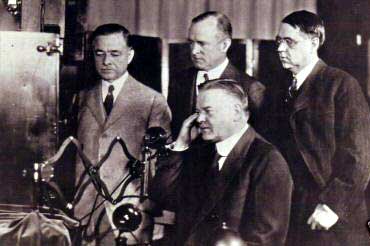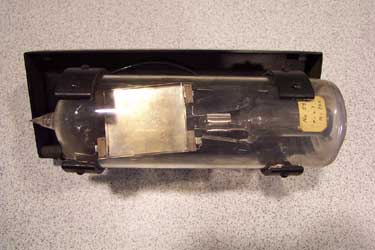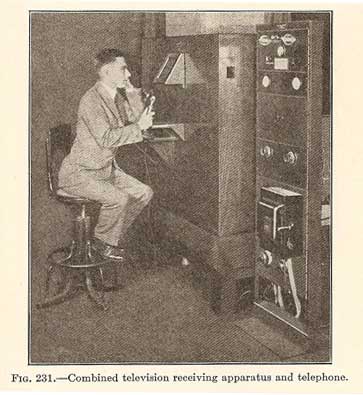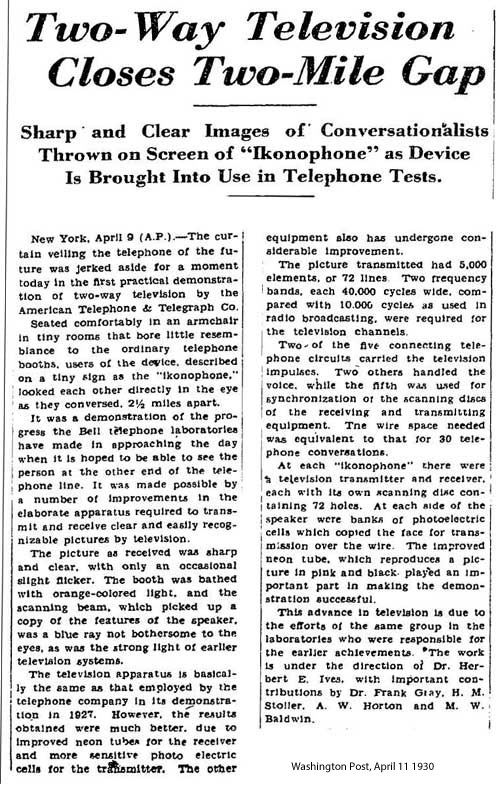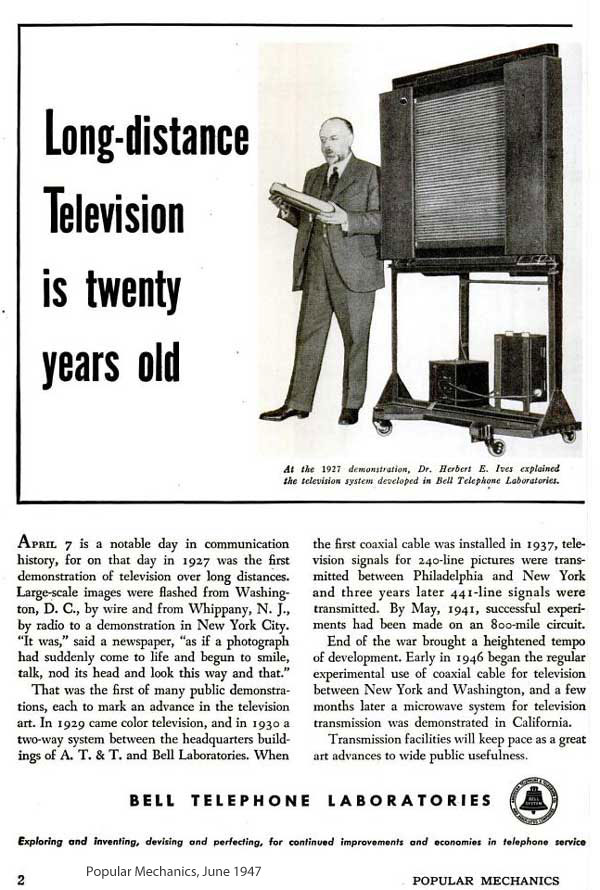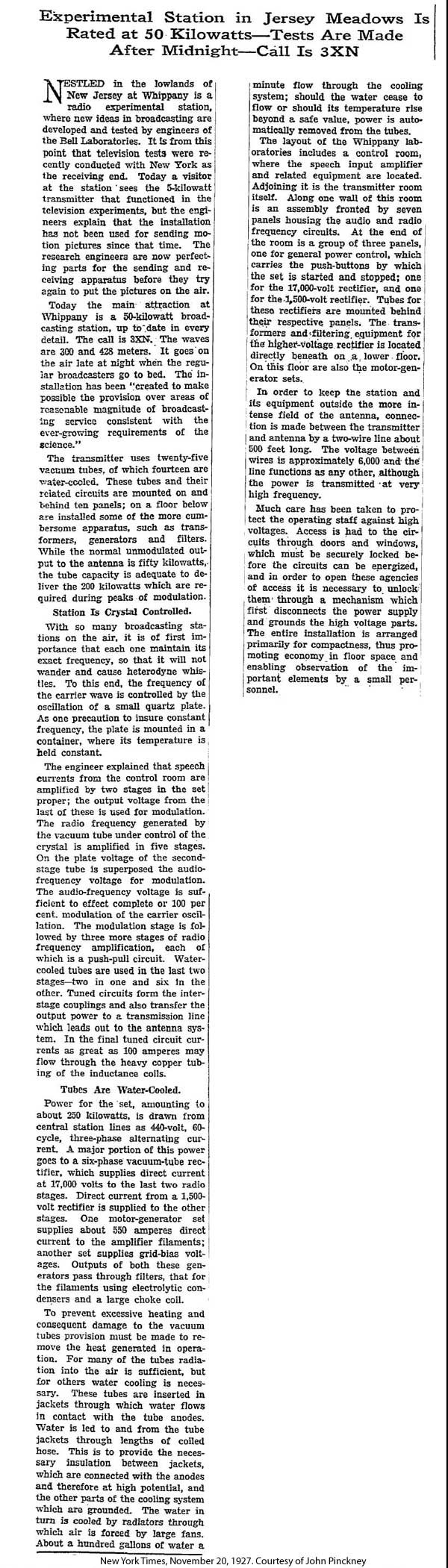

Mechanical Television Bell Labs Two-Way TelevisionIn 1927 Bell Labs began experimenting with two way television (picturephone). They built a large screen TV set using a specially designed neon lamp with 2500 individual anodes, arranged in 50 rows of 50 anodes..This set was used to televise Herbert Hoover in a demonstration in April of 1927. This was accomplished both by wire and by radio on experimental station 3XN from Whippany, N. J., 22 miles from New York, to the Bell Laboratories building in New York City where the speakers and performers were readily recognized on the receiving screen. The voices of the persons at Whippany were transmitted, and reproduced by means of a loudspeaker
Herbert Hoover
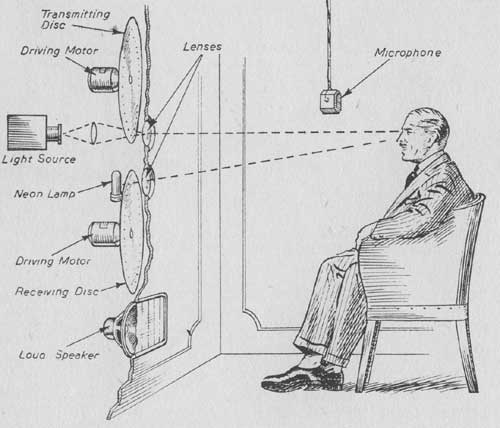
A diagram showing how the telephone-television system worked
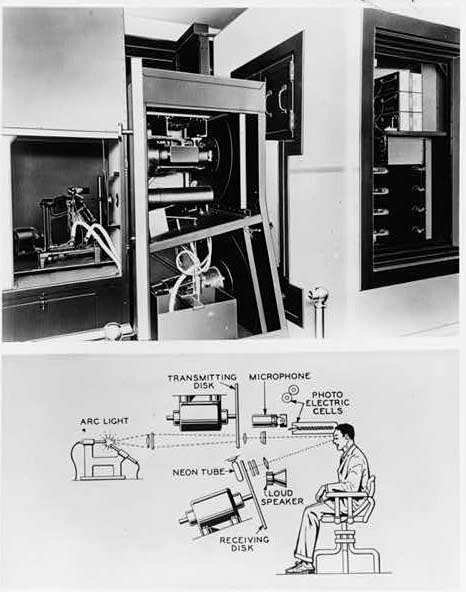
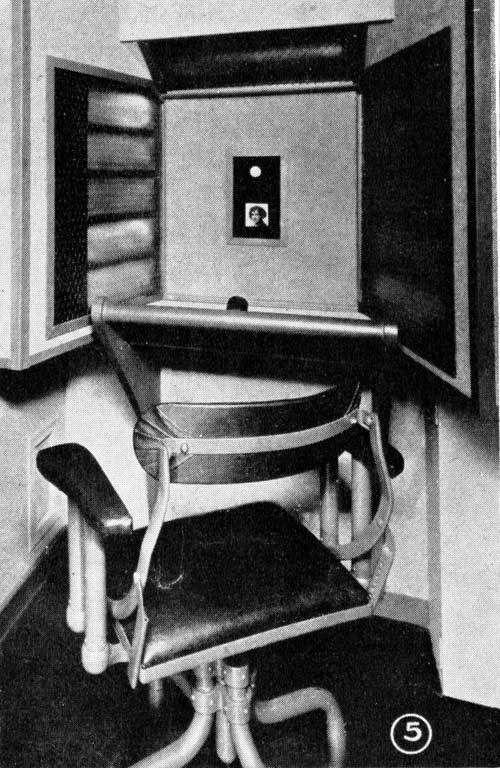
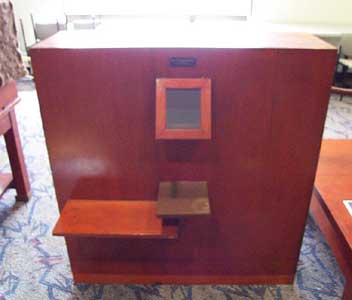
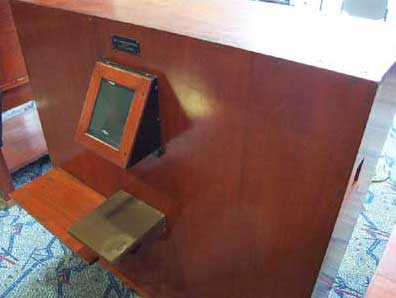
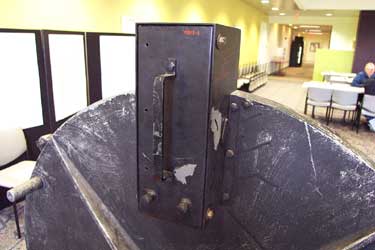
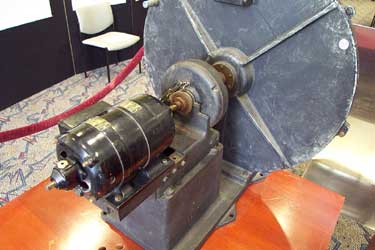
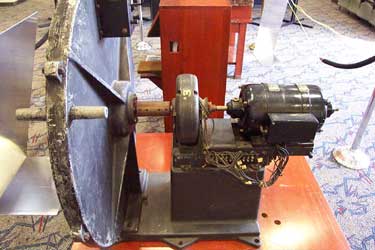
Pictures of the equipment
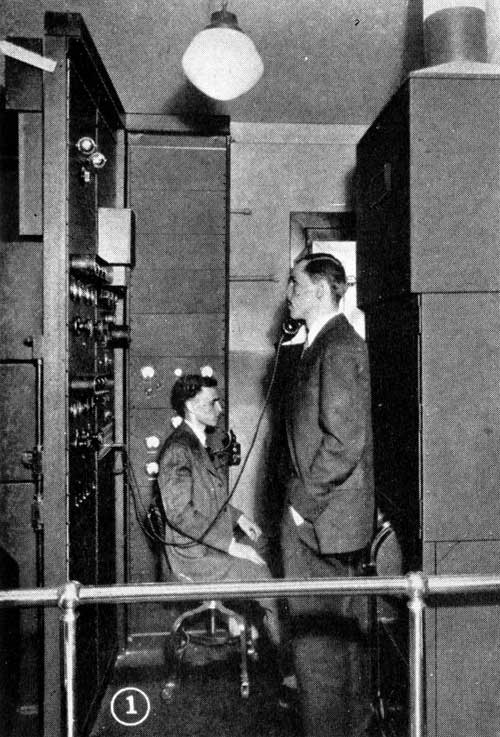
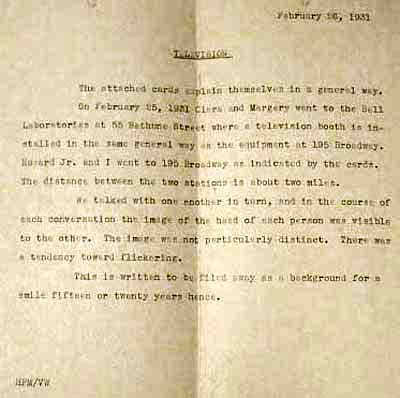
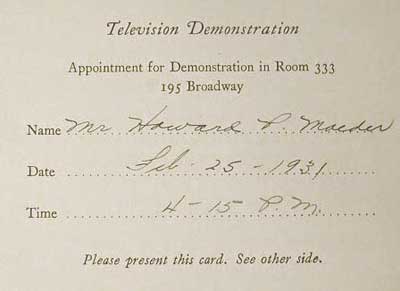
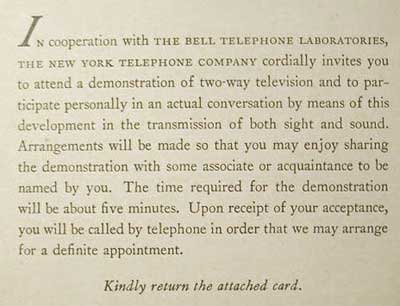
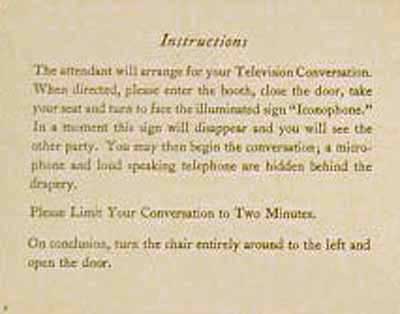
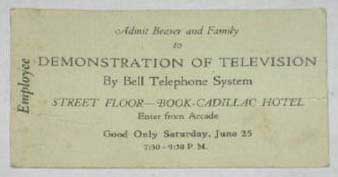
Bell Telephone Television Telephone Demonstrations These documents describe a collaboration between Bell Laboratories and the New York Telephone Company in February 1931. The documents include an invitation and 2 tickets from New York Telephone Company to a very successful NYC Banker Mr. Howard P. Maeder for a demonstration of the emerging TV telephone booth service. The man brought his wife, son and daughter (?) along. The ladies went to the Bell Labs office at 55 Bethune Street and the men went to the Telephone Co. office at 195 Broadway, two miles apart. The teleconference allowed them to speak and see each others' heads on a TV screen.
| ||||||||||||||||||