Early Television  
Mechanical TV History How it Works Mechanical Sets at the Museum Gallery Database Summary Broadcasting Technical Information Restoration Advertising Articles Roger DuPouy's Site Peter Yanczer's Site Gerolf Poetschke's Site Eckhard Etzold's Site
Early Electronic Television History American Sets at the Museum British Sets at the Museum Gallery Database Summary Broadcasting CRTs Accessories Technical Information Restoration Advertising Articles Gerolf Poetschke's Site Eckhard Etzold's Site
Postwar American TV History American Sets at the Museum British/Europen TV History British/Europen Sets at the Museum TV in the Rest of the World Gallery of Unusual Sets Broadcasting CRTs Accessories Technical Information Restoration Advertising Articles Eckhard Etzold's Site
Early Color TV History Sets at the Museum Gallery Database Summary Broadcasting CRTs Accessories Technical InformationRestoration Advertising Articles Pete Deksnis's Site Ed Reitan's Color Television History Eckhard Etzold's Site
The Early Television Foundation About the Museum Directions to the Museum Articles about the Museum Support the Museum Join our Email List Our Newsletter - "What's New in Old TVs" Equipment Donations Museum Members and Supporters Members Only Monthly Online Meetings Annual Convention Swapmeets
What's New on the Site Classifieds Parts for Sale Resources North American Radio and TV Museums Search the Site
Contact Us FacebookYouTube Channel

Ed Reitan's Color Television History

Color Line

CTC-10 Color Receivers (1960 - 1961)

Color Line

Early Television

Color Line

Early Television

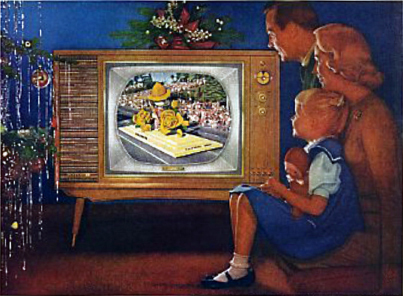
Christmas Magic with the CTC-10's "The Randolph"

Color Line

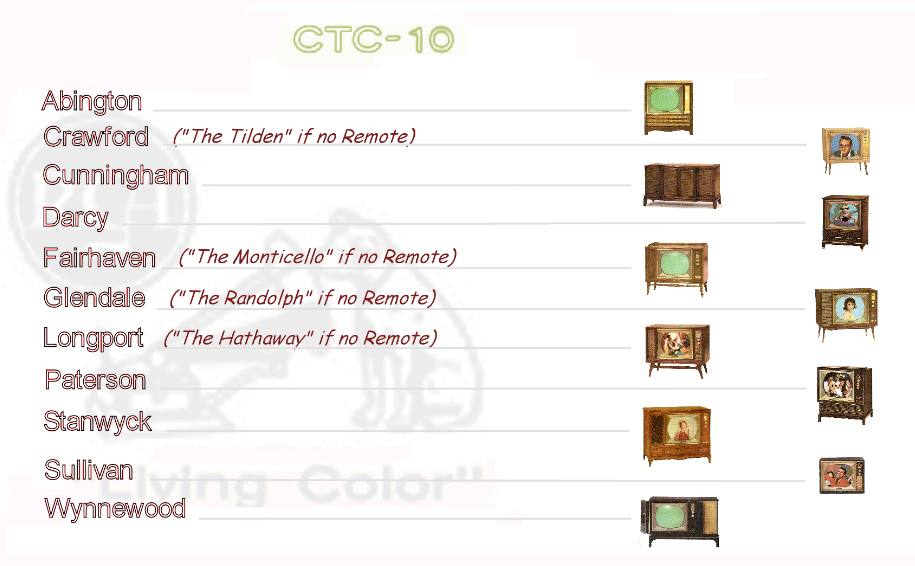
CTC-10 Chassis Models

Click on a cabinet to view an enlarged image of each model.

CTC10 Model Menu


Color Line

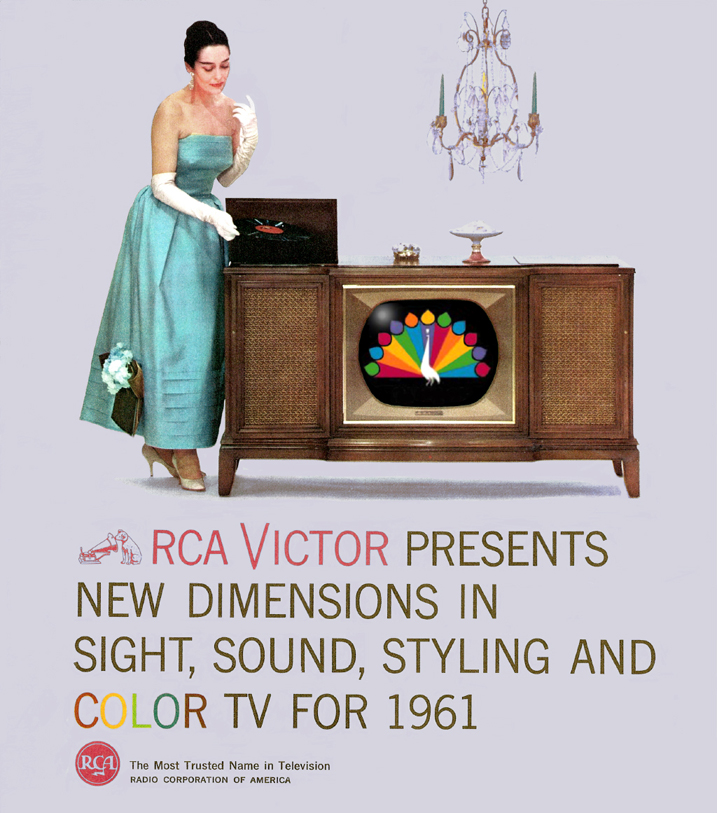
Introduced in the Fall of 1960 and sold through 1961, the CTC-10 Chassis was used in eleven different cabinet styles.

Four cabinet styles had different model names with and without remote control. Two other cabinet styles ("Stanwyck" and "Wynnewood") were available only with the seven-function remote control.

For the first time, a model was introduced in the Early American Maple style (the "Fairhaven" with remote control or the "Monticello" without remote control).

Also for the first time, a combination deluxe full-door color console ("Cunningham") was made available with a Stereo Victrola and AM-FM Stereo Tuner. The unit featured a 46 watt audio amplifier with six speakers.

One model, the "Paterson", with its unique protruding CRT-bell enclosure, was a holdover CTC-9 model.

The original CTC-10 consumer brochure was purchased on ebay (for your enjoyment) with cost no object (your donations will be appreciated). Don Kent did his usual excellent PhotoShop editing of these images.

Color Line

Indication of Cabinet Finish in Model Number

Starting with the CTC-5 models, an additional number was added to the end of the model numbers shown above to indicate finish type. These were:

  • "0" Genuine Dark Cherry or Autumn Cherry Veneers and Solids
  • "2" Ebony Finish
  • "4" Genuine Maple Veneers and Solids
  • "5" Mahogany Grained Finish, or Genuine Mahogany Veneers and Solids
  • "6" Walnut (Grained or Natural) Finish, or Genuine (Natural or French) Walnut Veneers and Solids
  • "7" Limed Oak Grained Finish, or Genuine Blonde Hardwood Veneers and Solids
  • "8" Genuine Bleached Birch Veneers and Solids
  • "9" Genuine Maple or Light Cherry Veneers and Solids

Color Line

V1.02 11-20-2006

Copyright 2006, Ed Reitan

Return to Color Receiver Gallery Index

Return to Home Page


Early Television Museum
5396 Franklin St., Hilliard, OH 43026
(614) 771-0510
info@earlytelevision.org