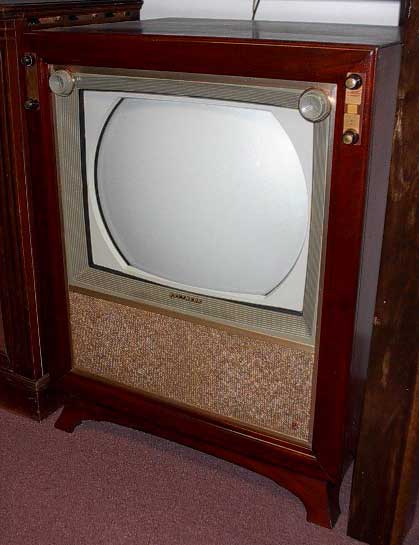
| Admiral |
FT15"
|
| Model1 - C1617A, 1 - C1617A (note 12) |
Canada Science And Technology Museum
|
|
| Model4 - C1617A |
| Bruce Buchannon |
| Julian Burke |
| John Folsom |
| Fred Hoffmann |
|
| 21" |
|
| Model10 - C322C
series |
| John Folsom |
| Bob Galanter |
| Paul Garbarczyk |
| Jack Joseph |
| Mike Molnar |
| Jeff Scolaris |
| Nick Williams (note 11) |
| Steve Williams |
| Anonymous (2) |
|
| Arvin |
15" |
|
|
| Capehart |
19" |
| Model1 - CXC-12 |
| Early Television Museum |
|
|
| 21" |
|
|
| CBS Columbia |
FT15" |
| Model1 - RX-89 |
| Early Television Museum |
| Model1 - RX-90 |
| Early
Television Museum |
|
| Model1 - RX-89 |
| John Folsom |
| Model4 - RX-90 |
| John Folsom (note 15) |
| Mike Molnar |
| Kurk Swanson |
| Anonymous |
|
| 16" |
|
|
| 19" |
| Model1 - 205, 1 - 205 (note 12) |
| Early
Television Museum |
|
| Model9 - 205 |
| John Folsom |
| Mike Molnar (note 9) |
| David Roper (note 9) |
| Jeff Skolarus (note 9) |
| Larry Whitlock (2) |
| Anonymous (3) |
|
| 22"
rectangular |
|
|
| Chromatic Television Labs |
Chromatron (several models) |
|
|
| Col-R-Tel |
Color wheel NTSC converter |
| Model2 - 100 |
| Early Television Museum |
| Museum of the Moving Image (NY) |
|
| Model30 - 100 |
| Dave Abramson |
| Loren Ashworth |
| Chuck Azzalina |
| Paul Baker |
| Cliff Benham (2) |
| Julian Burke |
| Michael Feldt |
| John Folsom |
| Darryl Hock |
| Bob Grasso |
| Steve Kissinger |
| Fred London |
| Larry Whitlock |
| Anonymous (16) |
|
| Colordaptor |
Color wheel NTSC converter kit |
| Model1 - C-15A |
| Early Television Museum |
|
| Model4 - C-15A |
| Don Hauff |
| Tim Moritz |
| Kirk Stankiewicz |
| Anonymous |
|
| Conrac |
15" studio monitor |
|
|
| 21" studio monitor |
|
|
| Crosley |
FT, Chromatron |
|
|
| Dage |
15" studio monitor |
| Model1 - 650 |
| Early Television Museum |
|
|
| Douglas |
15" prototype |
|
|
| DuMont |
15" |
|
|
| 15" studio monitor |
|
|
| 19" |
|
|
| 21" |
|
|
| Emerson |
FT |
|
|
| 15" |
|
|
| 21" |
| Model1 - C-502 |
| Early Television Museum |
|
|
| Fada |
15" prototype |
|
|
| General Electric |
FT15" |
| Model1 - 15CL100 |
| Early Television Museum |
|
| Model4 - 15CL100 |
| John Folsom |
| Bob Galanter |
| Steve Kissinger |
| Anonymous (1) |
|
| 15" studio monitor |
| Model1 - 4TM15 |
| Early Television Museum |
|
| Model4 - 4TM15 |
| Fred Hoffman |
| Anonymous (3) |
|
| 21"
|
|
| Model2 - 21C700 |
| Sean Duffy |
| Guy Whelchel |
|
| Gilfillan |
Chromatron |
|
|
| 21" |
|
|
| Hallicrafters |
FT |
|
|
| Chromatron |
|
|
| 15" |
|
|
| 21" |
|
| Model2 - 21CK801(note 6) |
| Bob Galanter |
| Mike Molnar |
|
| Hazeltine |
FT |
|
|
| Triniscope |
|
|
| 16" projector (6 models) |
|
|
| Hoffman |
15" |
|
|
| 19" |
|
|
| 21" |
|
| Model7 - M4021A Colorcaster |
| Dominique Evrard |
| Gary Miller |
| Ben Moyer |
| Charles Sanders |
| Ed Lefevre |
| Anonymous (2) |
|
| Homemade |
Projection receiver |
|
|
| Color drum receiver |
|
|
| Magnavox |
21" |
|
|
| Majestic |
15" |
|
|
| Montgomery-Ward |
21" |
|
|
| Motorola |
FT15" |
| Model1 - 16CK1 |
| Early Television Museum |
|
| Model5 - 16CK1 |
| John Folsom (2) |
| Bob Galanter |
| Owen Slater |
| Anonymous |
|
| 19" |
| Model1 - 19CK1 (note 9) |
| Early Television Museum |
| Model1 - 19CK2 (note 9) |
| Early Television Museum |
| Model4 - 19CT1 |
| Early Television Museum |
| Pioneer Village (NE) (note 9) |
| National Capital Radio and Television |
| Museum (MD) (note 9) |
|
|
| Model3 -19CK1 |
| Bob Galanter |
| Anonymous (3) (note 9) |
| Model1 - 19CK2 |
| Early Television Museum |
| Model13 - 19CT1 |
| John Folsom |
| Freescale Corp (note 9) |
| Fred Hoffman |
| Mike Molnar |
| Mike Molnar (note 9) |
| Chip Foley (note 9) |
| Tom Genova (note 9) |
| Luc Roman |
| Jeff Skolarus (note 14) |
| Kevin Snyder (note 9) |
| Larry Whitlock (note 9) |
| Anonymous (2) |
| Anonymous (note 9) |
|
| 21" |
| Model1 - 21CT2 |
| Early Television Museum |
|
| Model9 - 21CT2 |
| Tom Carlson |
| Henry Cournoyer |
| John Folsom |
| Bob Galanter |
| Ed Lefevre |
| Jim Richardson |
| Charlie Trahan |
| Anonymous |
| Tim Moritz |
| Vogue Vintage |
|
| Muntz |
Chromatron |
|
|
| 21" |
|
| Model2 - 721CV(note
6) |
| John Folsom |
| Chris Musselman |
|
| Olympic |
21" |
|
|
| Pacific Mercury (Sears) |
16" |
|
| Model1 - prototype (note 12) |
| with metal color CRT and early |
| “wand” convergence assembly |
| Ingo Kubbe |
|
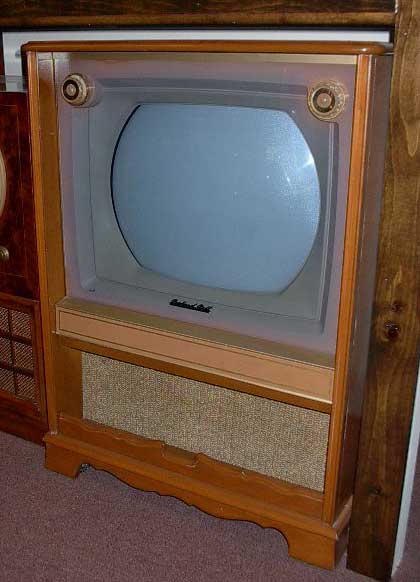
| Packard Bell |
21" |
|
|
| Philco |
FT |
|
|
| 15" |
|
| Model1 - prototype |
| John Folsom |
|
| 21"
|
|
|
| Model10 - 22D5102 (TV-123) |
| Dave Abramson |
| Estate of Ed Westfall |
| Joe Aldrich |
| Pete Deksnis |
| John Folsom |
| Brian Gadow |
| Jeff Scolaris |
| Anonymous (3) |
|
| Apple |
|
|
| Philharmonic (AMC) |
15" |
|
|
| Polarad |
15" monitor [M-200] |
|
|
| Raytheon |
15" FT |
|
| Model2 - prototype |
| Bob Millard (note 12) |
| Anonymous |
|
| 19" |
|
|
| 21" |
|
| Model3 - C-21C1-M |
| Tim Moritz |
| Anonymous (2) |
|
| RCA Labs |
15 Triniscope models |
|
|
| Telemural color
projector [TLS50] |
|
| Model1 - Telemural color projector |
| Modelwith 21-CT-55 chassis TLS50 |
| John Folsom |
|
| RCA Color Products Group |
14 FT models |
| Model3 - Model 5 |
| Early Television Museum |
| Indiana State Museum |
Museum of Radio and Communication, CT |
|
|
| Model1 - 16" prototype CPA (note 12) |
| Nick Williams |
| Model1 - prototype Trinoscope |
| Ed Alfonsi |
| Model9 - Model 5 (note 1) |
| Wayne Abare |
| Walter Fitz |
| John Folsom |
| Monty Holt |
| Monty Holt (note 12) |
| Mike Molnar |
| James O'Neal (note 10) |
| Don Saltzman |
| Anonymous |
|
| RCA Victor |
15" commercial model |
Model17 - CT-100 (note 2) |
Model161 - CT-100 (note 2) |
| Rectangular prototype |
|
Model1 - GF753L Anonymous |
| 21" commercial models |
| Model7 - 21-CT-55 |
| Early Television Museum (2) |
| Indiana State Museum |
| Museum of Radio and Communication, CT (2) |
|
| MZTV (Toronto) |
| UCLA (CA) |
| Model5 - CTC-4 |
| Glass City ReCreation House |
| Early Television Museum (4) |
|
| Model30 - 21-CT-55 (note 8) |
| Dave Abramson |
| Mark Aceto |
| Jacob Amero |
| Dave Arland |
| Geoff Bourne |
| William Burrows |
| Matt Caputo |
| Tom Carlson |
| Dominique Evrard |
| John Folsom |
| Steve Frans |
| Bob Galanter |
| Bob Hodge |
| Steve Kissinger |
| Ingo Kubbe |
| Gary Miller |
| David Perdue |
| Jean-Charles Petignat (note 13) |
| Chuck Pharis |
| Mike Sauer |
| Dave Sica |
| Gilbert Smith |
| Kirk Stankiewicz |
| Nick
Williams |
| Scott Winther |
| Marshall Wozniak |
| Anonymous (4) |
| Model38 (1) - CTC-4 |
| Henry Cournoyer |
| Dominique Evrard |
| John Folsom |
| Bob Galanter |
| Bob Gatarz |
| Kevin Gleason |
| Fred Hoffmann |
| Len Horowitz |
| Dave Jones |
| Jack Joseph |
| Steve Kissinger |
| Bruce Kurt |
| Mark Mason |
| Mike Molnar |
| Chris Musselman |
| Philip Nasadowski |
| Phil Nelson |
| Keith Park |
| Doul Peel |
| Chuck Pharis |
| Jim Richardson |
| Jeff Skolaris |
| Gilbert Smith (2) |
| Kevin Snyder |
| Kirk Stankiewicz (2) |
| Jack Stout |
| Jacob Stracner Watkins |
| Evan Webster |
| Nick Williams |
| Marshall Wozniak |
| Anonymous (7 |
|
| RCA Broadcast |
15" studio monitor
|
| Model1 - TM10 |
| Museum of the Moving Image (NY) |
|
| Model6 - TM10 |
| Julian Burke |
| John Folsom |
| Phil Nelson |
| Kurk Swanson |
| Anonymous (2) |
|
| 21" studio monitor
|
| Model4 - TM21 |
| Museum of Broadcast Technology (3) |
| Early Television Museum |
|
| Model7 - TM21 |
| Dave Abramson |
| Julian Burke |
| John Folsom |
| Fred Hoffman |
| Ralph Sargent |
| Nick Williams |
| Anonymous |
|
| Sears-Silvertone |
15" |
|
| Model1 - prototype 4160 |
| John Folsom |
|
| 21" |
|
| Model1 - 7140 |
| Nick Willliams |
|
| Sears - Toshiba |
16" rectangular |
|
| Model4 - rectangular |
| Ed Lefevre |
| Joe Theriot |
| Anonymous (2) |
|
| Sentinel |
15" |
|
|
| 21" |
| Model1 - IU-816 (Note 6) |
| Early Television Museum |
|
| Setchell-Carlson |
21" |
|
|
| Sparton |
15" |
| Model1 - Model16A211 |
| Early Television Museum |
|
|
| Stromberg-Carlson |
15" |
|
| Model2 - K1 |
| Steve Kissinger |
| Kurk Swanson |
|
| 21" |
|
| Model1 - 102CM (note 6) |
| John Folsom |
|
| Sylvania |
FT |
|
|
| 15" |
|
| Model6 (1 ) - 451 |
| John Folsom |
| Don Saltzman (2) |
| Anonymous (4) |
|
| 21" |
| Model1 - 21C609M (note 6) |
| Early Television Museum |
|
| Model5 - 31T Series |
| Bob Galanter |
| John Horvath |
| Tim Moritz |
| Nick Williams |
| Jimmy Scichilone |
|
| Tel-Instrument Co. |
Slide scanner and trinoscope |
|
Model1 - 2400 |
| Van Nuys, CA |
| Monitor - 2401 |
|
Model1 - 2401 |
| Tom Carlson |
| Telechrome Inc. |
Triniscope picture monitor |
|
(Lost Gilfillan Lab configuration with 10 racks) |
| Tele-King |
FT |
|
|
| Truetone |
19" (note 7) |
|
|
| Uniray |
21" |
|
|
| Western Auto |
21" |
|
|
| Westinghouse |
FT |
|
|
| 15" |
| Model1 - prototype (note 4) |
| Early Television Museum |
| Model3 - H840CK15 (note 3) |
| Early Television Museum |
| Model3 - H840CK15 - Canadian version |
| Early Television Museum |
| George Westinghouse Museum (PA) |
|
| Model31 (1) - H840CK15 (note 3) |
| Dave Arland |
| John Folsom (2) |
| Bob Galanter |
| Estate of Ed Westfall |
| Fred Hoffman |
| Mark Johnson |
| Kurk Kowal |
| Ingo Kubbe |
| Eric Loepke |
| Pete Martin |
| Caleb Meyer (note 13) |
| Jim Otradovec |
| Jeff Skolaris |
| Rob Stephens |
| Kurt Swanson (2) |
| Keith Wichman |
| Nick Williams |
| Marshall Wozniak |
| John Yurkon |
| Anonymous (11) |
|
| 19" |
|
|
| 22" rectangular |
|
| Model2 (1) - H22T155 |
| Jim Richardson |
| Anonymous (2) |
|
| Wickes |
15/16" monitor |
|
|
| Wilcox-Gay |
15" (Majestic) |
|
|
| Zenith |
FT |
|
|
| 15" |
|
| Model9 - 43M20 (note
5) |
| John Folsom |
| Bob Hodge |
| Mike Molnar |
| Jeff Skolarus |
| Anonymous (5) |
|