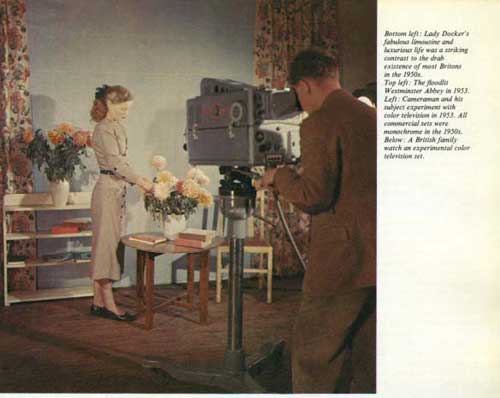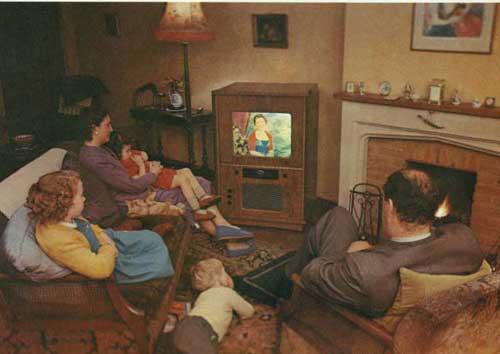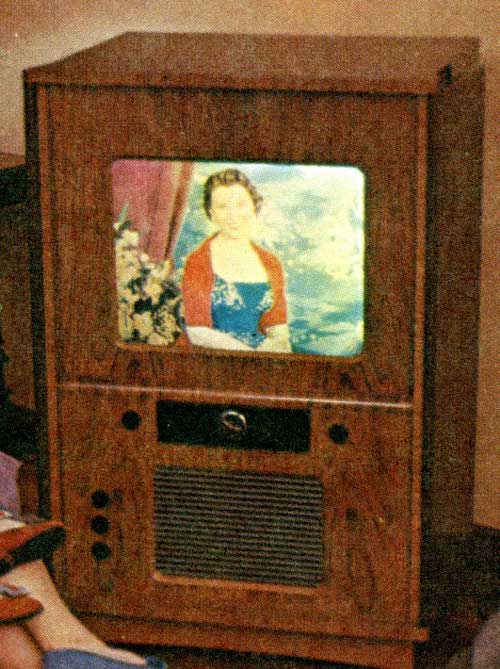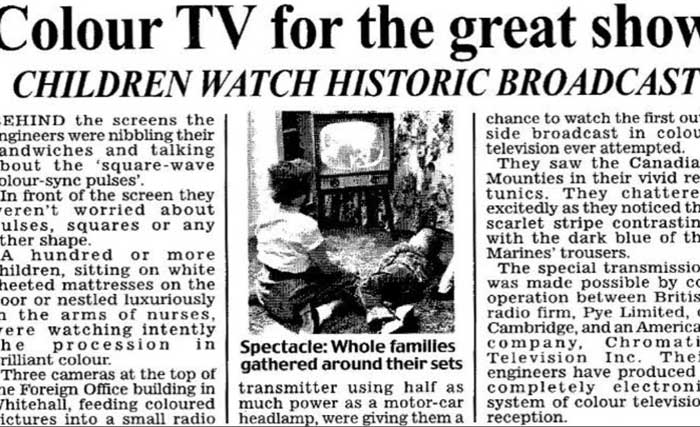

Early Color Television British Experimental Field Sequential Color SystemIn 1953 the coronation of Queen Elizabeth II was televised in color, using an experimental field sequential system developed by Pye and Chromatic Television Laboratories. A field sequential camera was used and the signal was broadcast over a UHF channel to Great Ormonde Street ChildrenÔÇÖs Hospital in London. Receivers had the Chromatron CRT rather than the color wheel that had been used in all previous field sequential systems. The June 18, 1953 issue of Model Engineer has the following information (courtesy of Alan Stepney):
The following is from comments posted on the AudioKarma discussion group. If anyone has any additional information, please send it to us:
*********************************** This site discusses the BBC television coverage of the 1953 coronation. A single paragraph is devoted to the experimental closed circuit color broadcast. I agree that it was possibly a field sequential system. Here's the paragraph:
This recollection from a cameraman who worked the 1953 coronation broadcast:
From the Pye website:
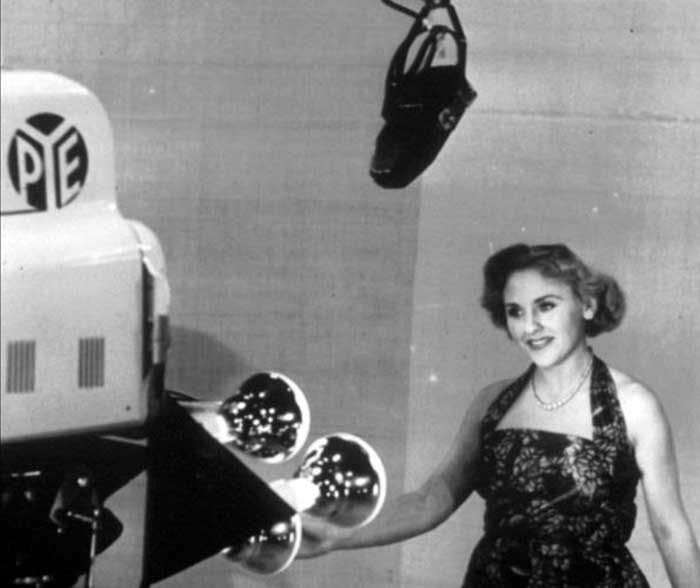
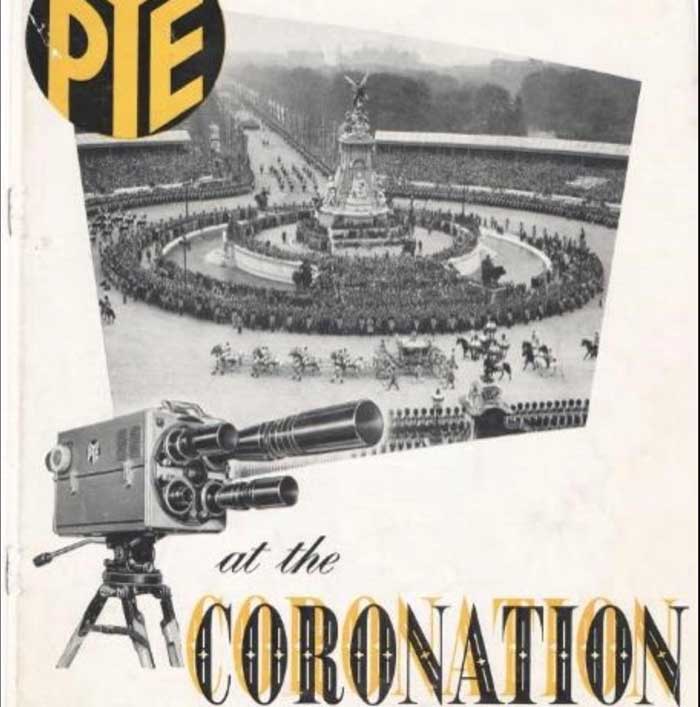
Pye MK1 camera in action (1950) The 1953 Coronation of Queen Elizabeth II
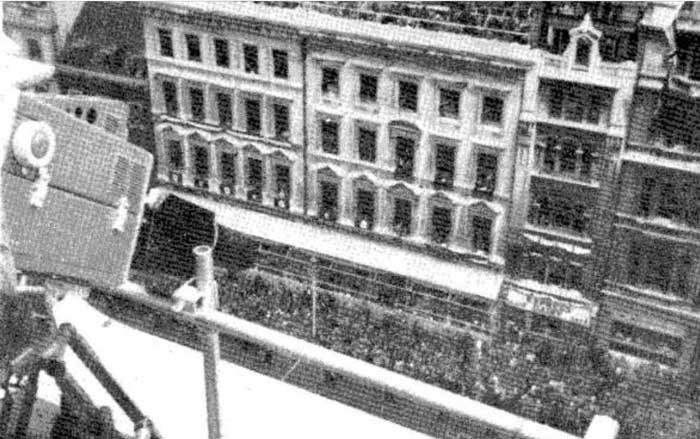
Color camera on the Foreign Office Roof
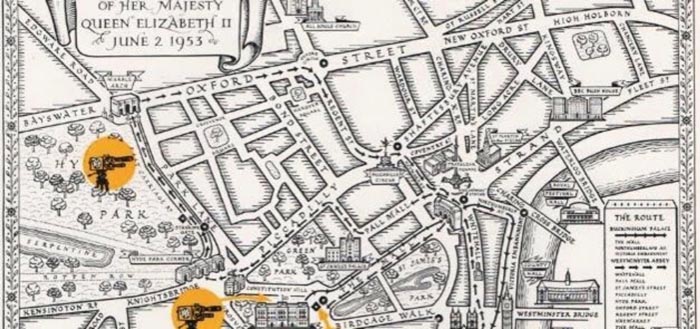
The route of the procession
Courtesy of Jerome Halphen
|