
Early Television  
Mechanical TV History How it Works Mechanical Sets at the Museum Gallery Database Summary Broadcasting Technical Information Restoration Advertising Articles Roger DuPouy's Site Peter Yanczer's Site Gerolf Poetschke's Site Eckhard Etzold's Site
Early Electronic Television History American Sets at the Museum British Sets at the Museum Gallery Database Summary Broadcasting CRTs Accessories Technical Information Restoration Advertising Articles Gerolf Poetschke's Site Eckhard Etzold's Site
Postwar American TV History American Sets at the Museum British/Europen TV History British/Europen Sets at the Museum TV in the Rest of the World Gallery of Unusual Sets Broadcasting CRTs Accessories Technical Information Restoration Advertising Articles Eckhard Etzold's Site
Early Color TV History Sets at the Museum Gallery Database Summary Broadcasting CRTs Accessories Technical Information Restoration Advertising Articles Pete Deksnis's Site Ed Reitan's Color Television History Eckhard Etzold's Site
The Early Television Foundation About the Museum Directions to the Museum Articles about the Museum Support the Museum Join our Email List Our Newsletter - "What's New in Old TVs" Equipment Donations Museum Members and Supporters Members Only Monthly Online Meetings Annual Convention Swapmeets
What's New on the Site Classifieds Parts for Sale Resources North American Radio and TV Museums Search the Site
Contact Us Facebook YouTube Channel

Early Color Television

Who Sold the First NTSC Color Set to the Public?

Here is the history of the first introduction of NTSC color sets, courtesy of Marshall Wozniak  

Admiral

December 12, 1953: Ad in the New Castle, PA newspaper implies that Admiral sets are for sale.


Several articles found by Marshall Wozniak support the claim that Admiral sets were available in December of 1953.

The book Watching TV - Four Decades of American Television, by Harry Castleman and Walter J. Podrazik, says that Admiral started selling sets on this date (Thanks to TVHistory.TV and Steve Dichter for this information)

Early Television

Early Television

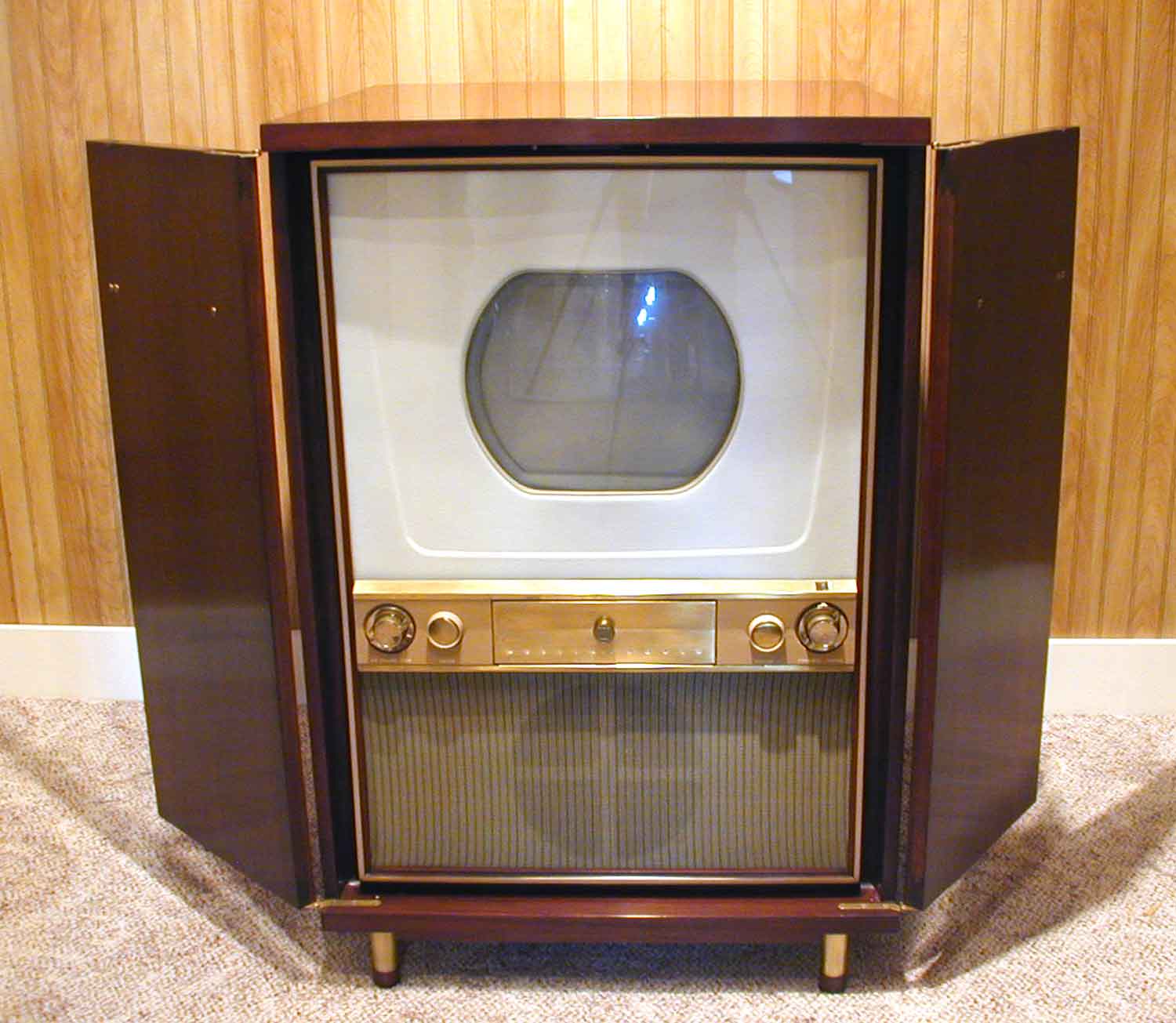
Model C1617A

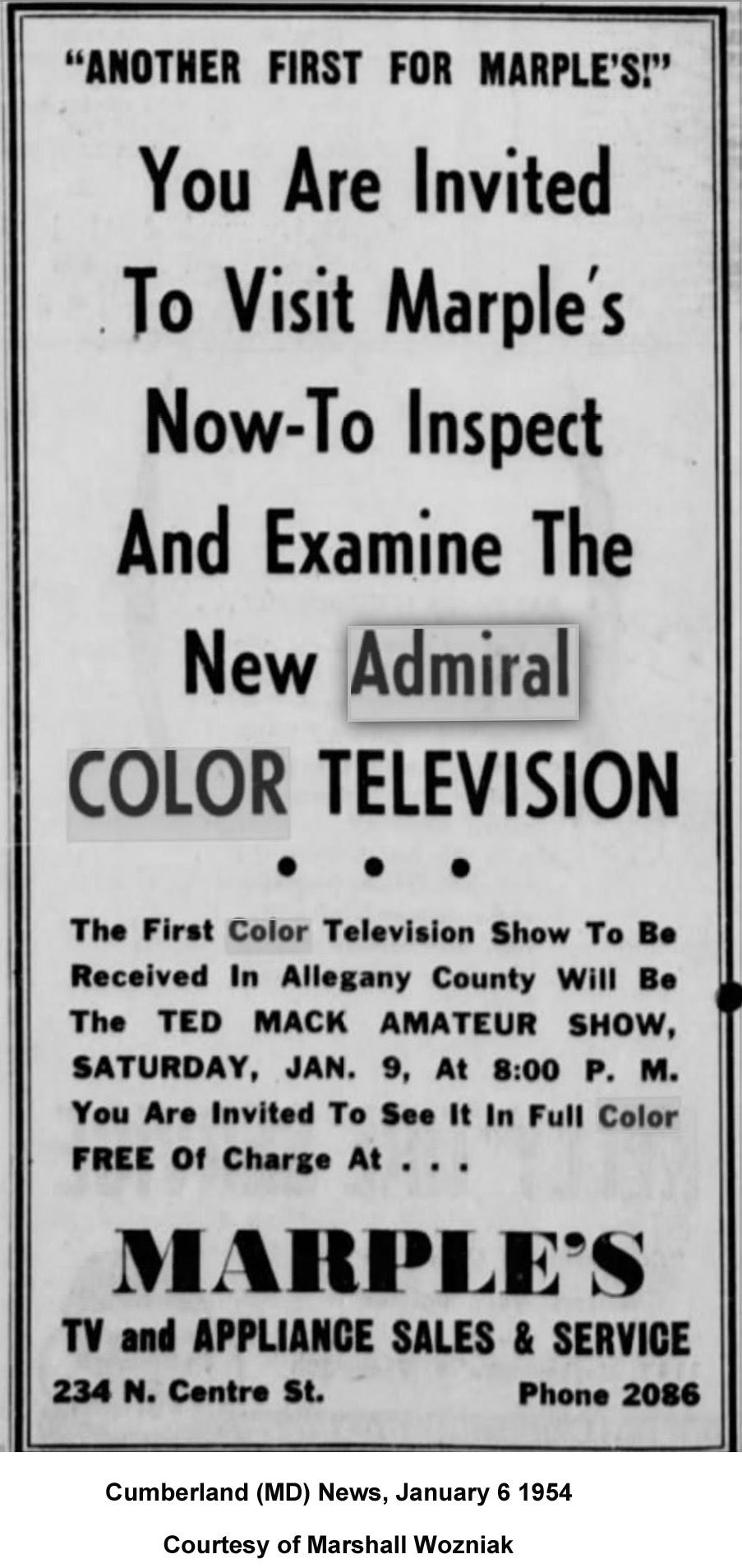
January 6, 1954: Ad in the Cumberland, MD newspaper stating that an Admiral set would be on display in a local TV shop

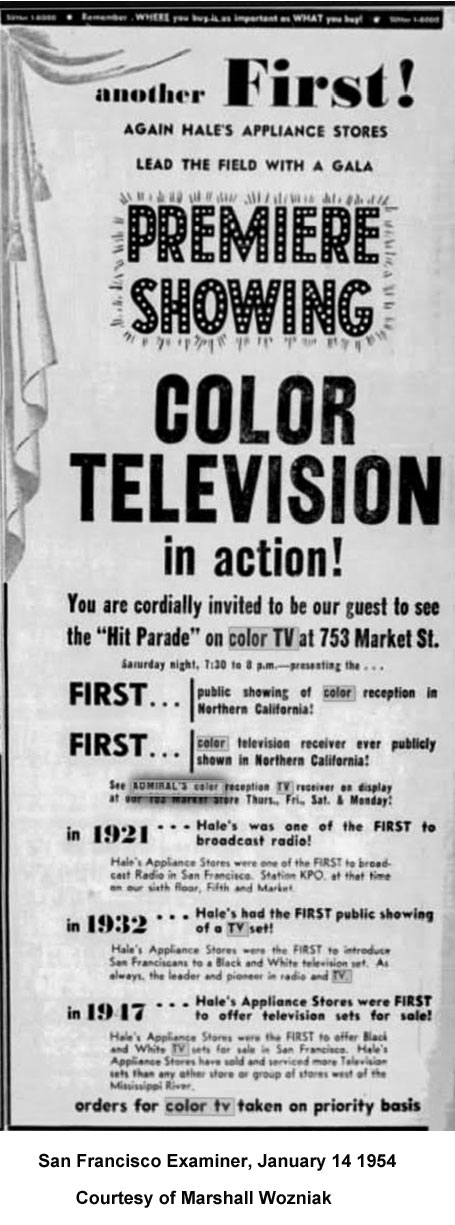
January 14, 1954: Ad in the San Francisco Examiner stating that Admiral sets were available for purchase

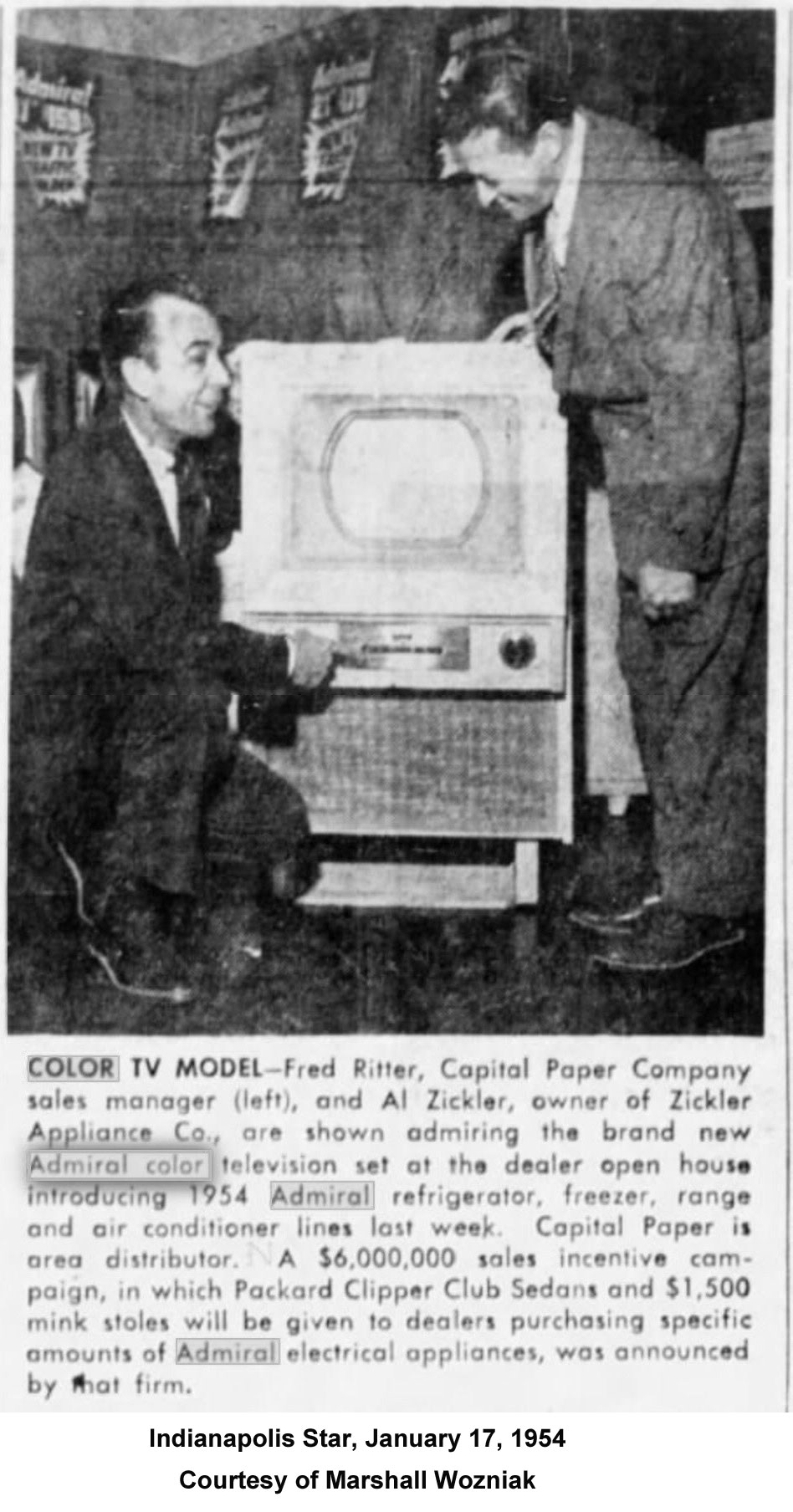
January 17, 1954: Article in the Indianpolis Star showing Admiral set at a dealer


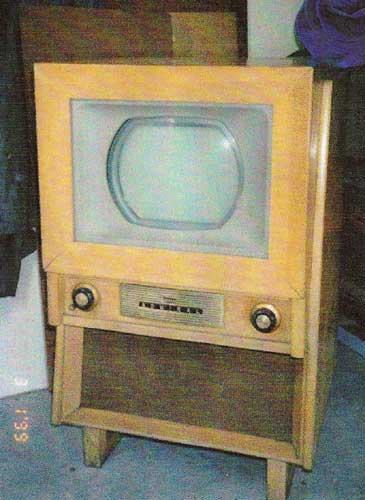
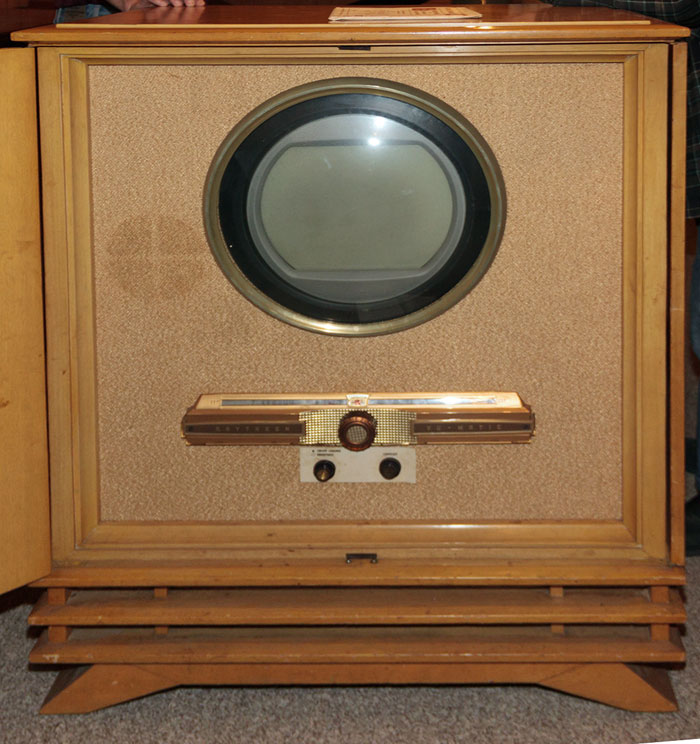
Raytheon

Early Television

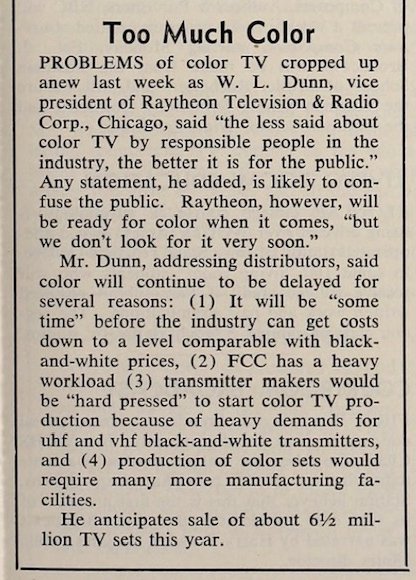
 January 26, 1953: Raytheon's thinking - "too much color".

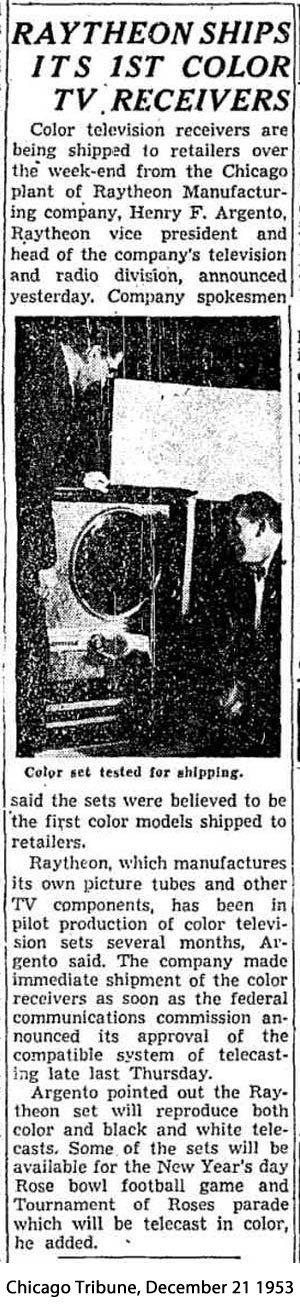
December 21, 1953: Raytheon issues a press release saying that they have delivered 15 inch set to their distributors. Chicago Tribune article says that sets are being delivered to retailers.

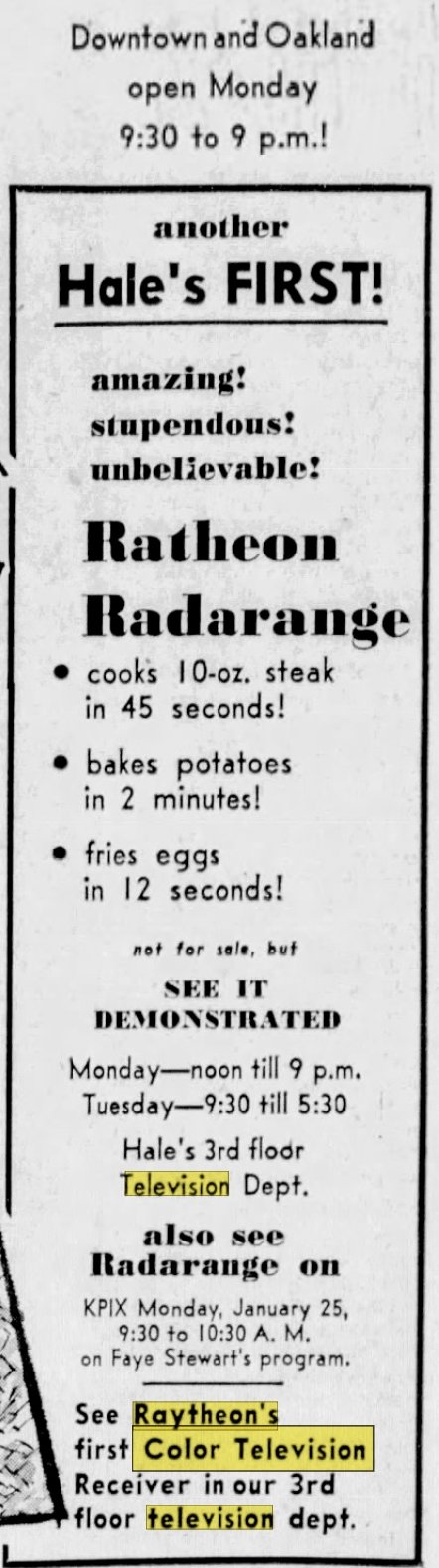
January 24, 1954: Demonstrated at Hales Department Store in San Francisco

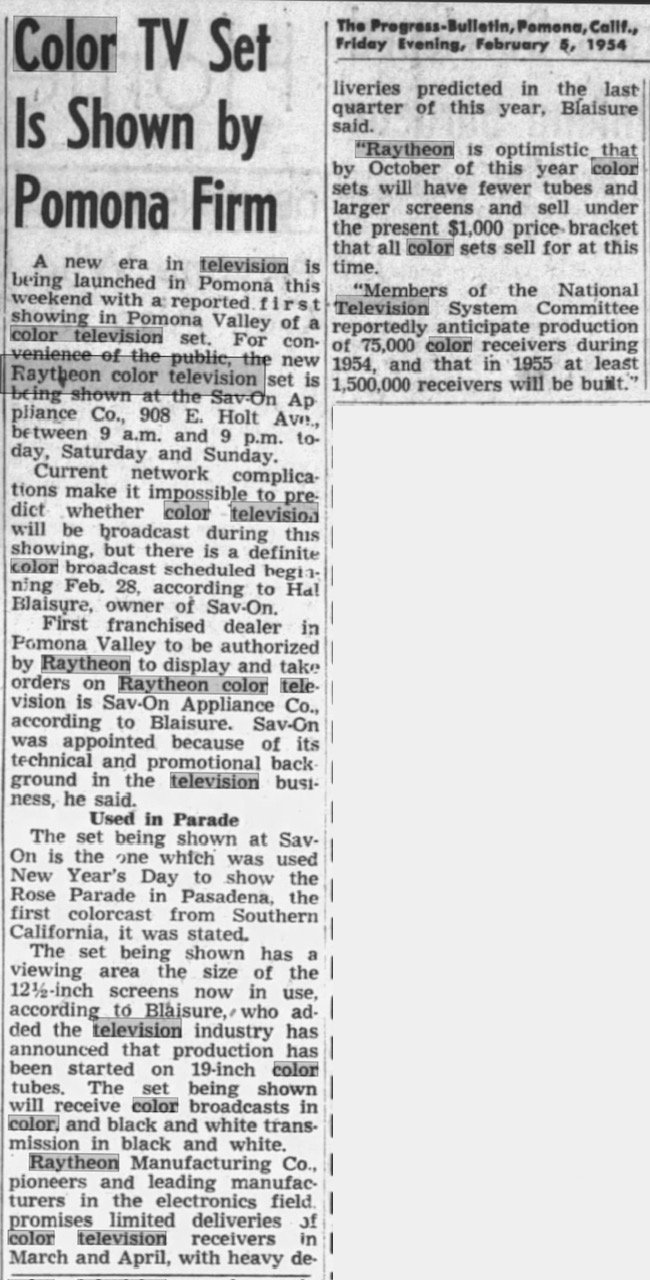
 February 5, 1954: Rose Parade Raytheon color set shown at Sav-On Appliance Co; in Pomona Ca. , with limited deliveries promised for March and April, 1954

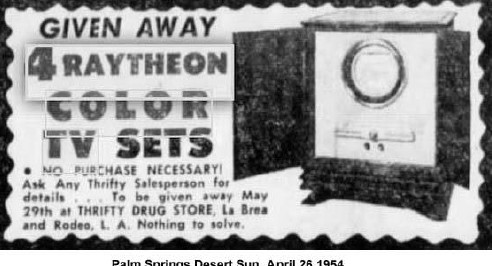
April 26, 1954: A “give away” of 4 Raytheon color sets at a Thrifty Drug store in Los Angeles, CA. on May 29, 1954.

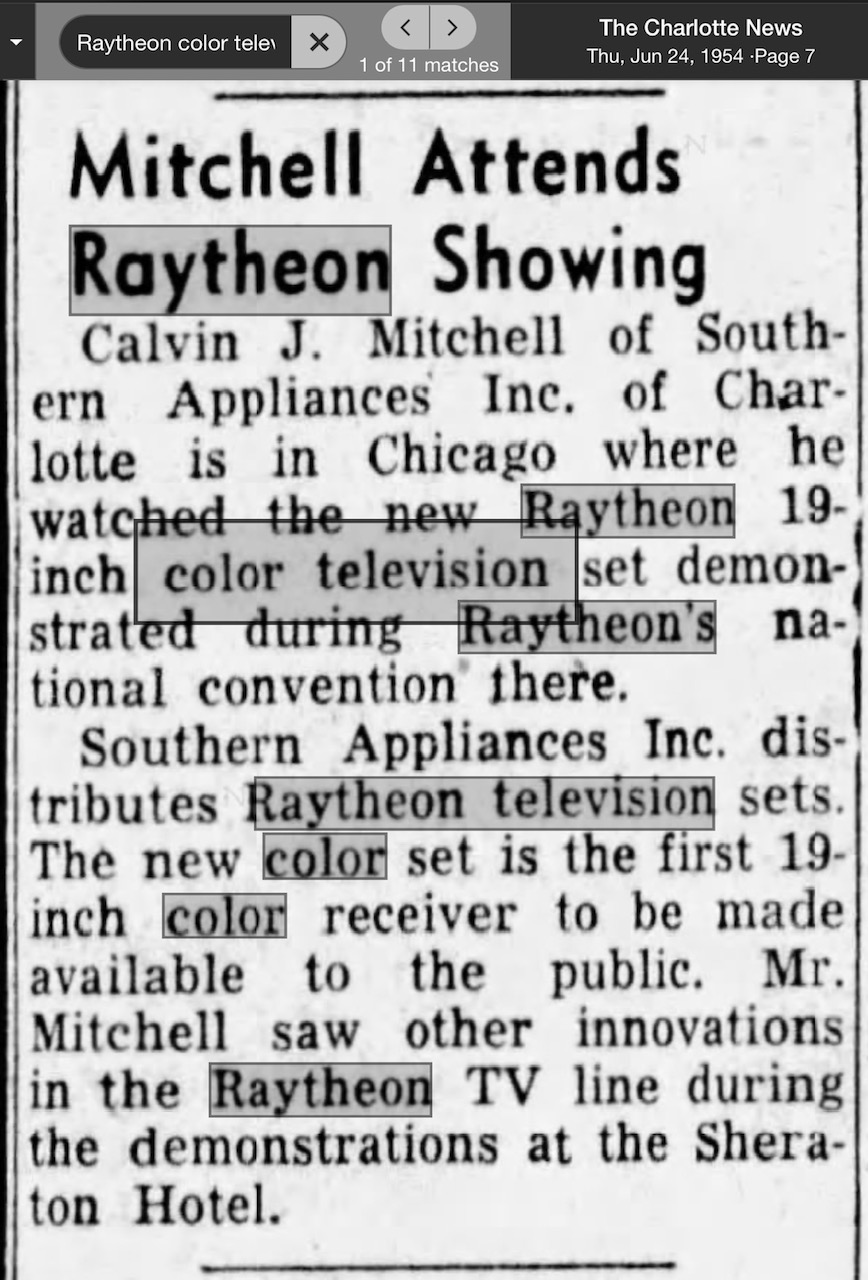
June 24, 1954:  Raytheon first 19 inch color set shown in Chicago.

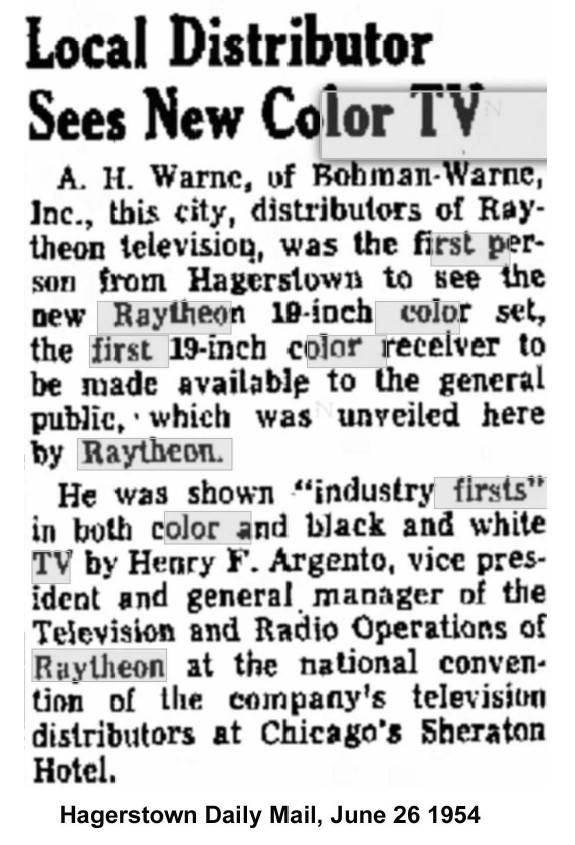
June 26, 1954: A Raytheon with a 19 inch color CRT described as the “first 19 inch color color set to be made available to the general public.”. A very early showing of the 19 inch color tube.

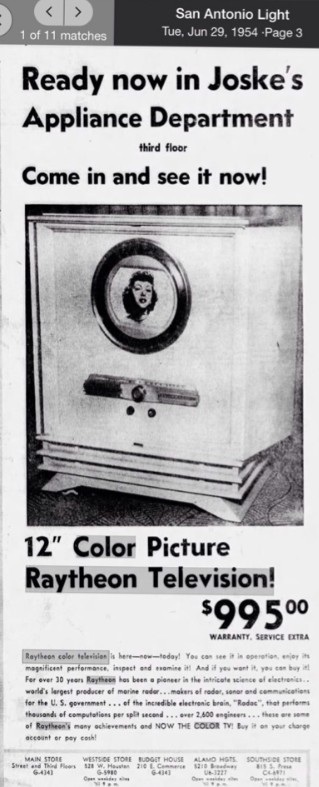
June 29, 1954: Joske's Department Store. Ad with actual photo of the set.

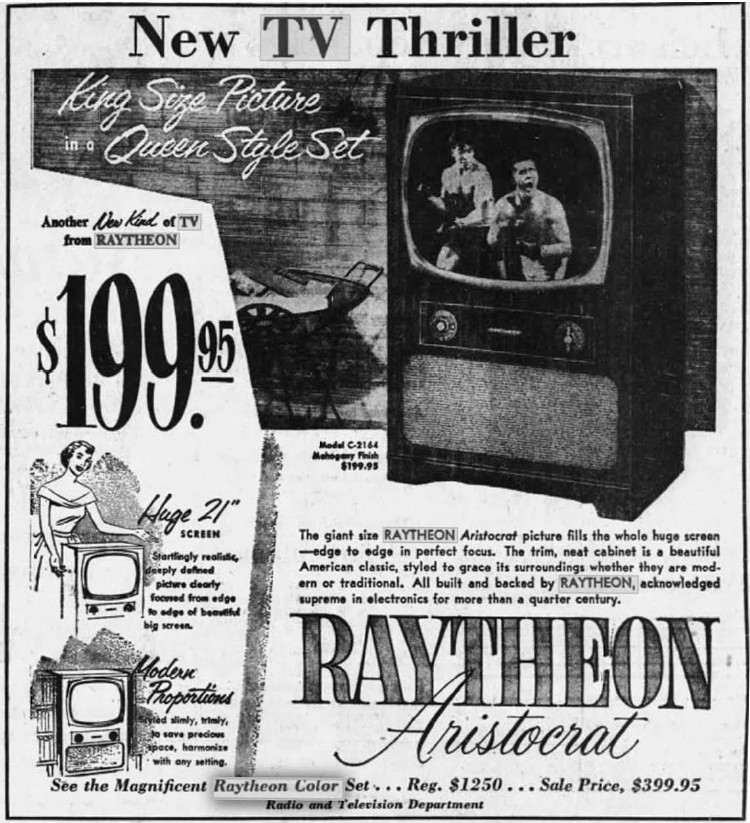
September 20, 1954:  Raytheon color set reduced to $399.95 and offered for sale at a Chicago department store.

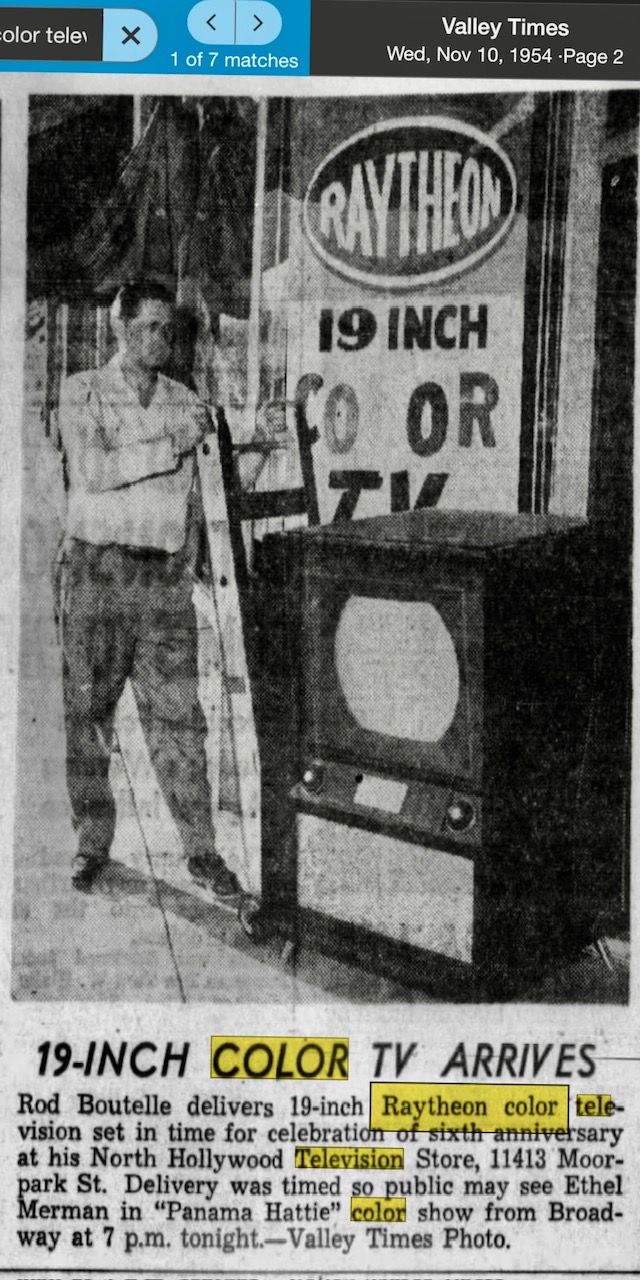
November 10, 1954: Raytheon 19 inch color set arrives at a North Hollywood store.

Philharmonic (AMC)

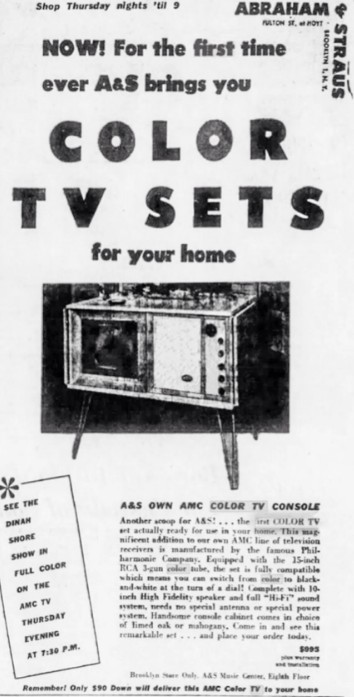
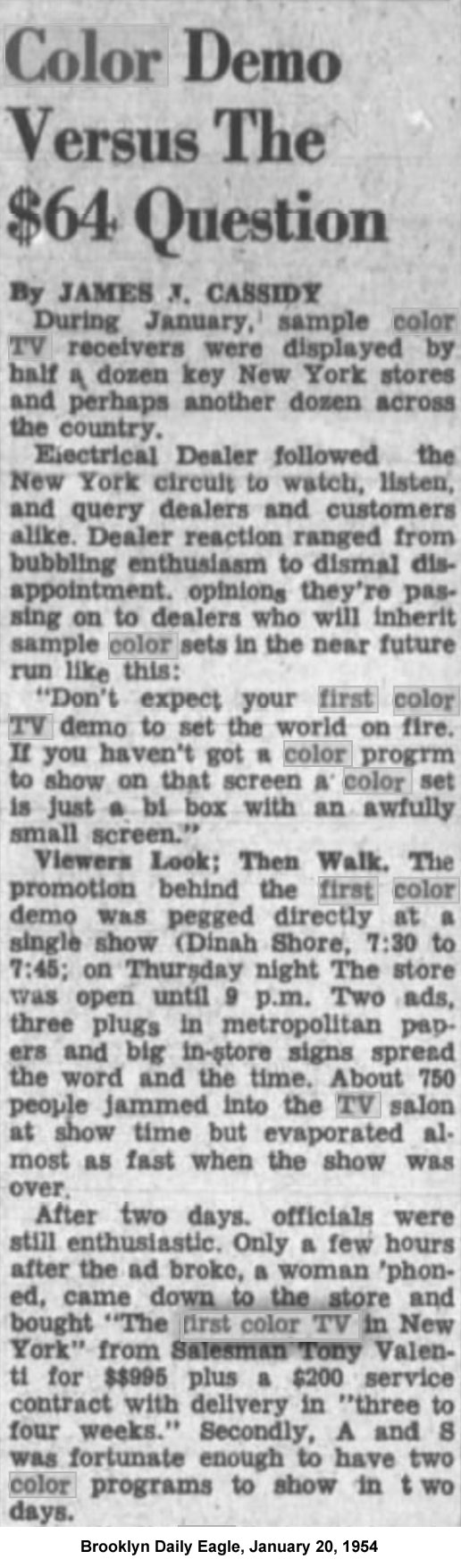
January 20, 1954: Article in the Brooklyn Daily Eagle reported that a Philharmonic (AMC) set was sold for $995, plus a $200 service contract, with delivery in 3 to 4 weeks.

Early Television

Westinghouse

Early Television

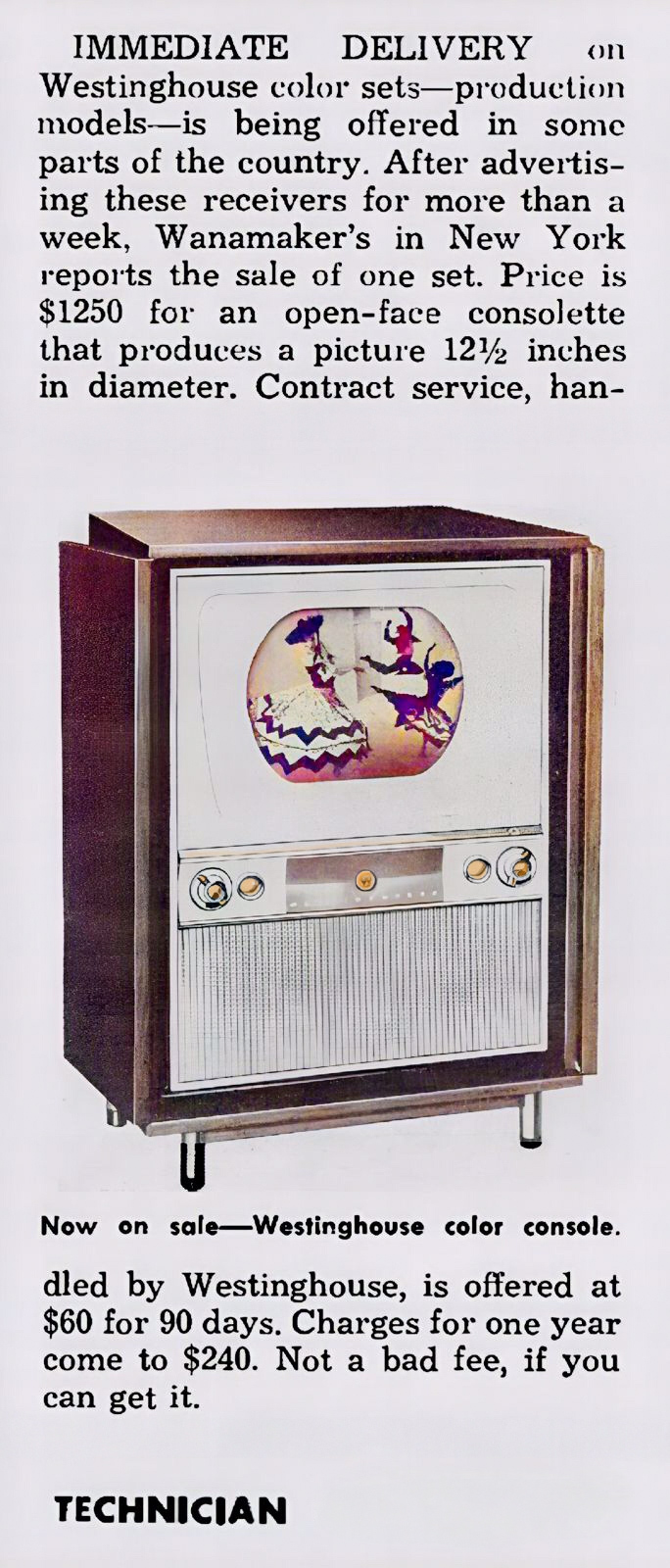
Prior to February 13, 1954: A Westinghouse color set was sold by Wanamakers Department Store in New York City


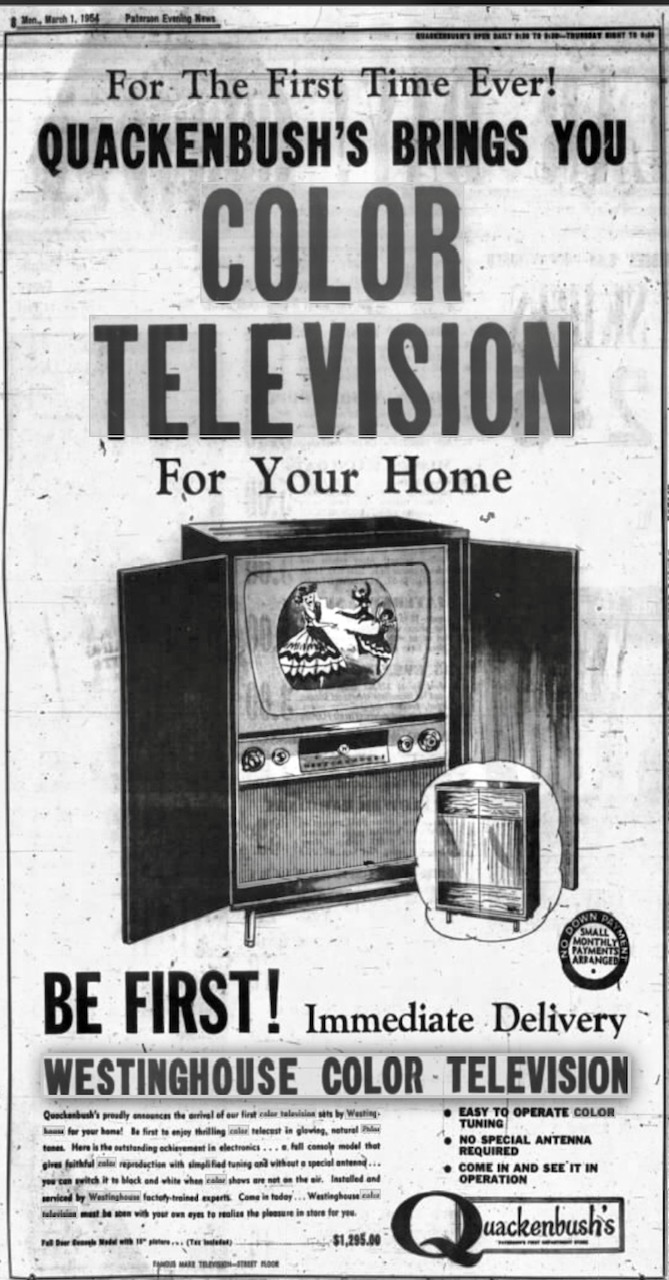
March 1, 1954: Advertisment appears for the Westinghouse H940CK15, priced at $1,295.

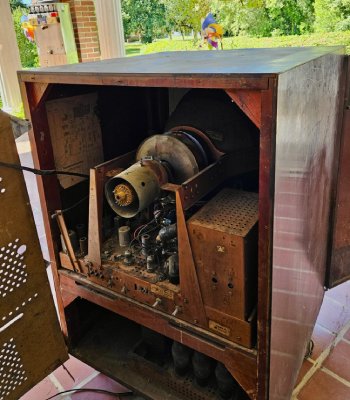
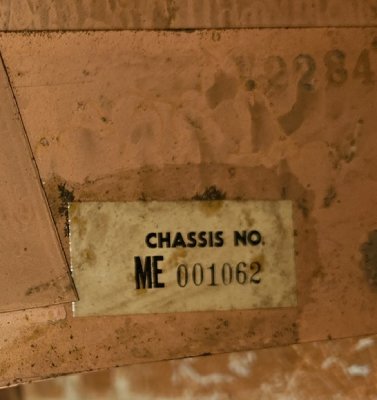
At least 1062 H840CK15 sets were made, evidenced by Luke Miller’s H840CK15. It is estimated that 500 were sold.


RCA

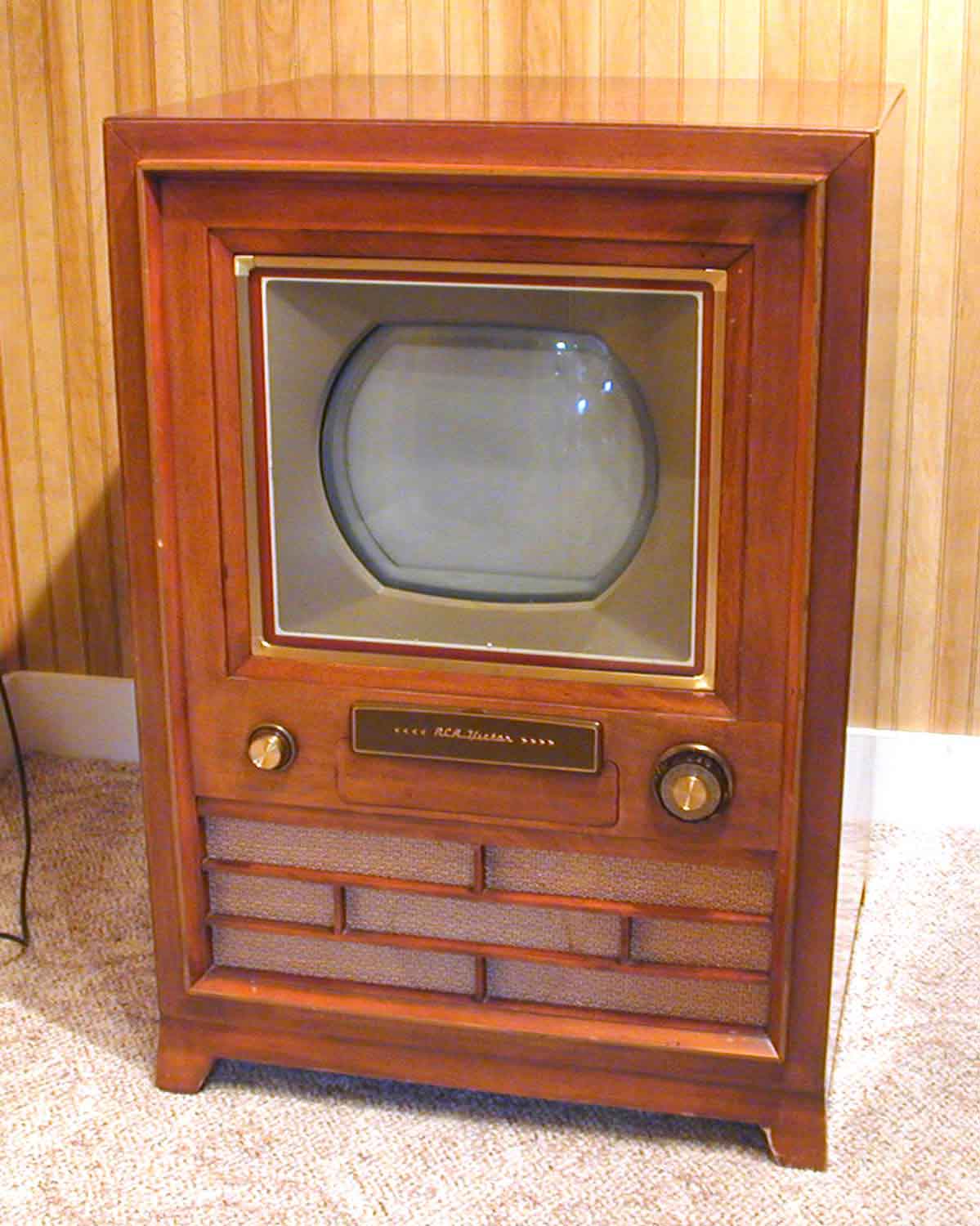
June, 1954: RCA starts selling its CT-100. About 4000 were sold.

Early Television

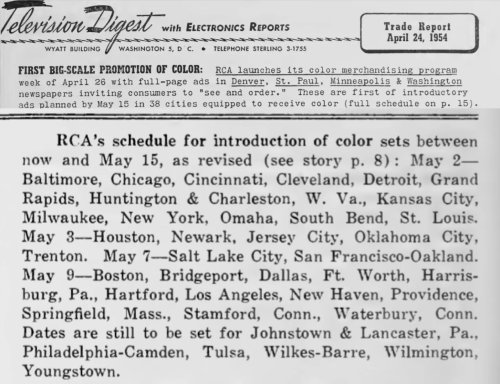
April 26, 1954. A report on RCA’s rollout of their first color television receiver, the CT-100, courtesy Television Digest Trade Report


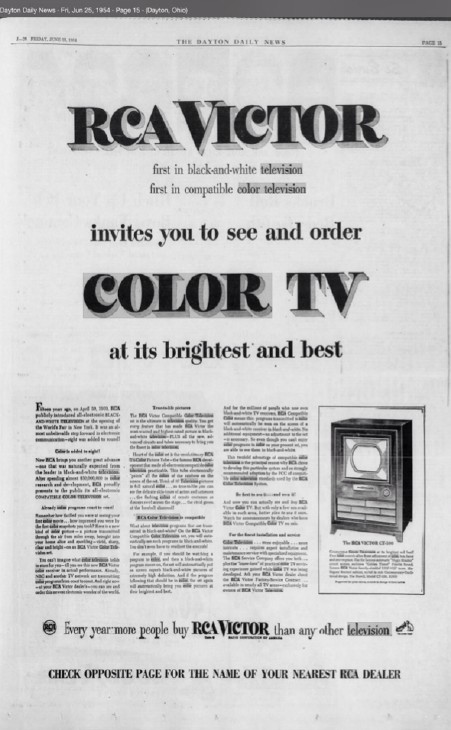
April 25, 1954: This is the advertisement by RCA appearing in multiple cities in the “color network”.


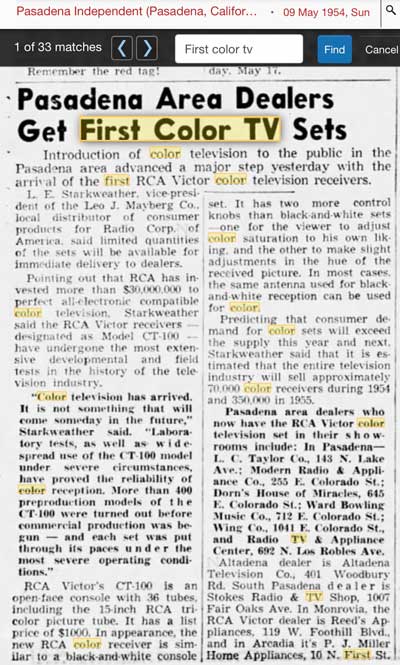
May 9, 1954: RCA’s first color sets hit dealer showrooms in April and May, 1954.

Marshall's comments:

1. RCA had brand name and advertising advantages with the “big” advertising blitz.

2. Why would the public want to buy a 15 inch color set from Admiral, Westinghouse or RCA in 1954, when they knew 19 inch and 21 inch color sets were coming in 1954 from Motorola and RCA for less money?  The upcoming color sets were widely publicized in newspapers.

3. We found evidence that the Admiral set were being sold as late as 1957 and Westinghouse set as late as 1956.

4. The Admiral’s price was dropped to as low as $199. and the Westinghouse as low as $299. and people weren’t buying.  They had to give them away and they did in various contests and promotions.

5. . I found a newspaper article (Steve D. found the earlier ad) from “Dorn’s” a Southern California dealer that offered for sale an Admiral color set at all of their 6 stores in 1957.  How many did they have in stock?  I believe these Admirals sat in warehouses across the country as NOS.   I had previously sent you an article where an Admiral spokesperson told a Chicago Daily News reporter that 1000 Admiral color sets were in production as of January 4, 1954.  There is documentation showing “a second series” of Admiral color sets were distributed in April and May, 1954.  Same thing with the Westinghouse set.  The advertisements pictured the C1617A and H840CK15 so they were selling the sets we are discussing.

6. I found initially that the Westinghouse color sets were only sold in NYC and NJ  in February, 1954.  That might explain low sales numbers.  It wasn’t until April that Westinghouse began shipping their first color sets to the rest of the country, evidenced by newspaper articles I’ve found and published at my site.  At peak production Westinghouse produced “about 2 dozen sets a day” at the Horsehead plant. It took 16 hours to pass quality control for each set.  The goal was to reduce that time and hire more employees, only 250 at first.  The Westinghouse H840CK15 was in production for about 6 months.

Marshall Wozniak

Visions4 Magazine 


Early Television Museum
5396 Franklin St., Hilliard, OH 43026
(614) 771-0510
info@earlytelevision.org