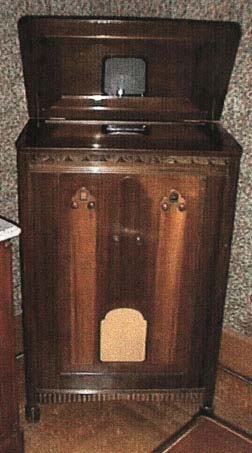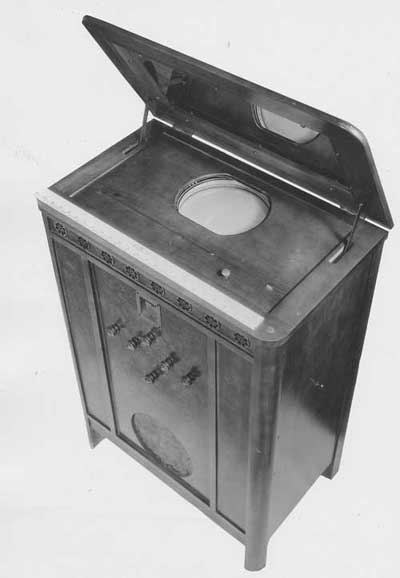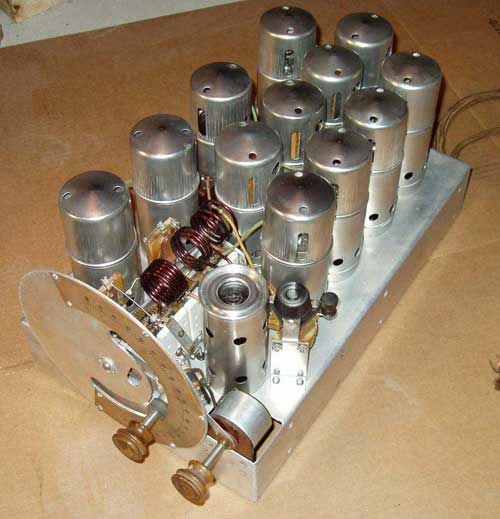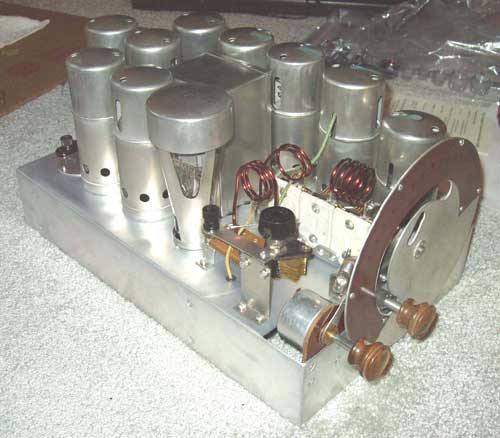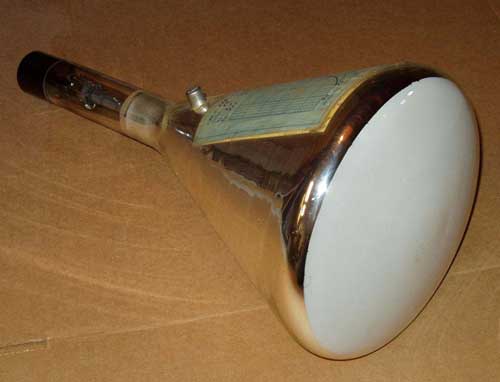

Early Electronic Television RCA 1931 Field Test Receiver Pictures and commentary courtesy of Darryl Hock This set was made in late 1931 for reception of 120 line mechanical broadcasts. The camera was a flying spot scanner. The iconoscope was providing extremely poor performance at this time, and they didn't want to evaluate this set using it until it was ready. In 1932 RCA ran tests with up to 180 lines with this set and an iconoscope, but they admitted that 180 lines was at the limit this receiver could realistically provide. In 1933 RCA started another full field test with the iconoscope camera and a new receiver using 240 line/ 24fps. This was the first receiver for RCA that utilized a single tuner for both the picture and sound with a fixed spacing of the carriers. So by 1933, this 1931 set was all but obsolete. Here is an article by Jeff Lendaro about discovering the set (courtesy of Darryl Hock).
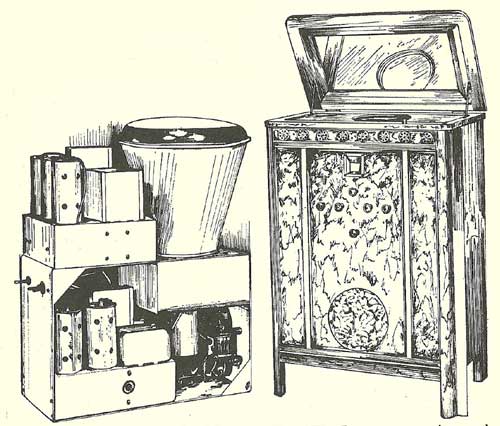
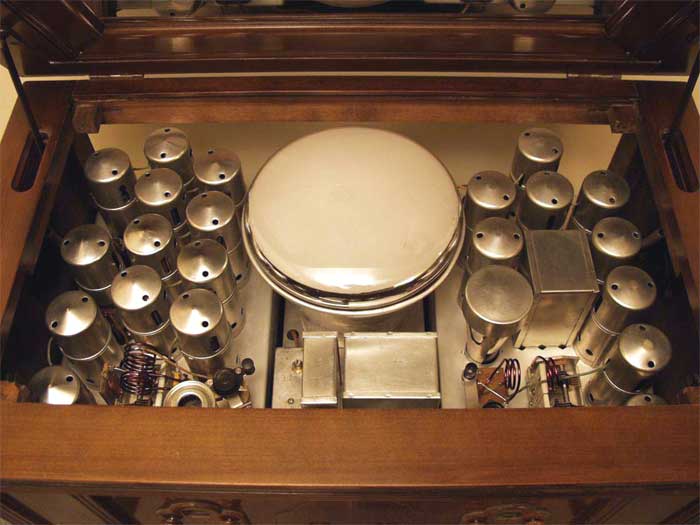
Drawing from a 1937 book For more information, see these articles from RCA: Top inside view, showing the picture chassis, CRT face, and sound chassis The picture chassis The sound chassis The CRT
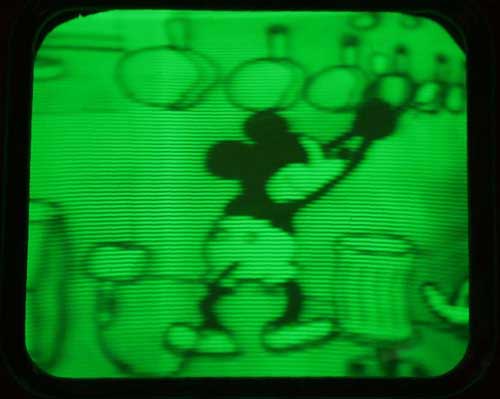
A photo off the screen
|