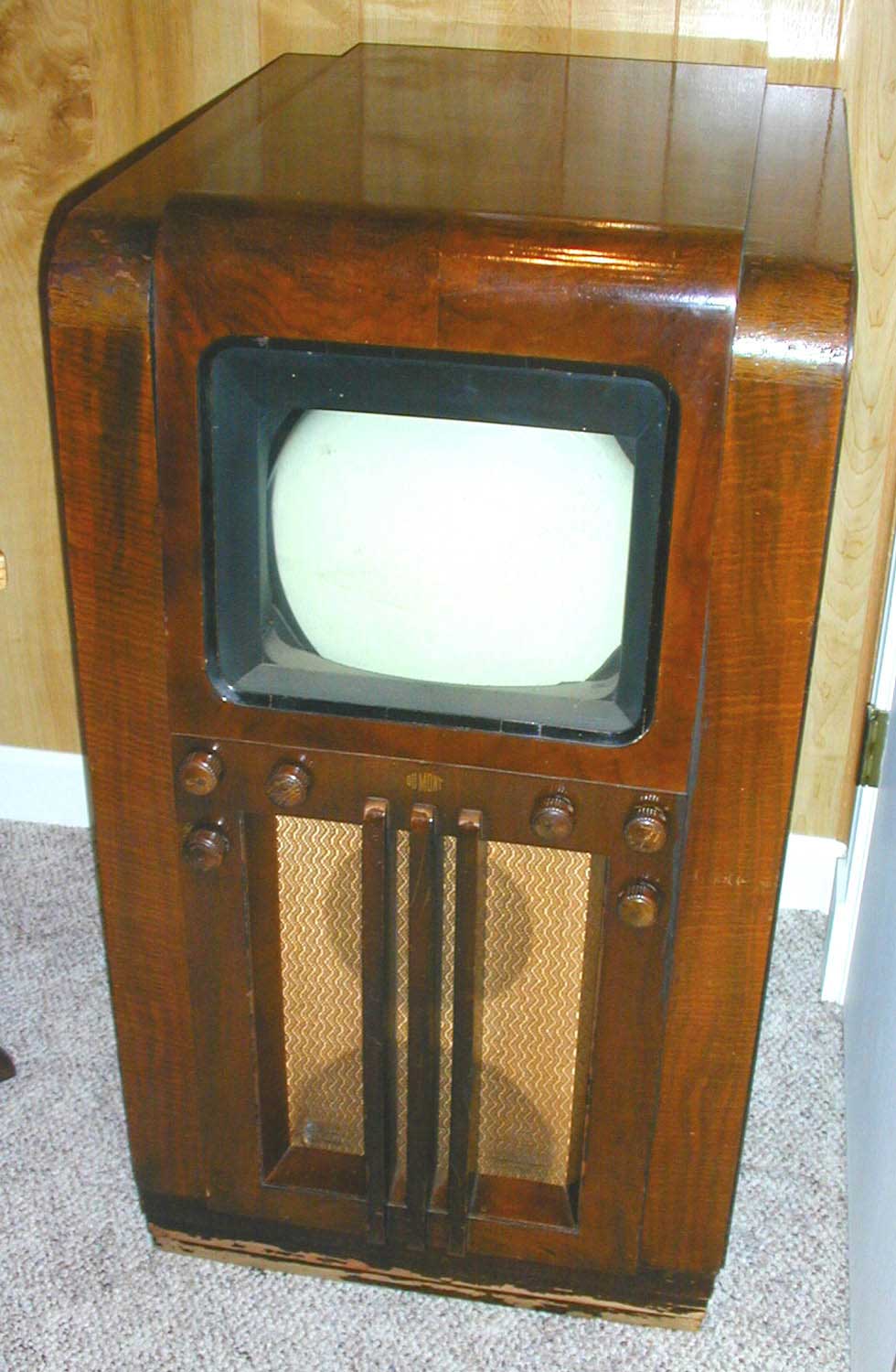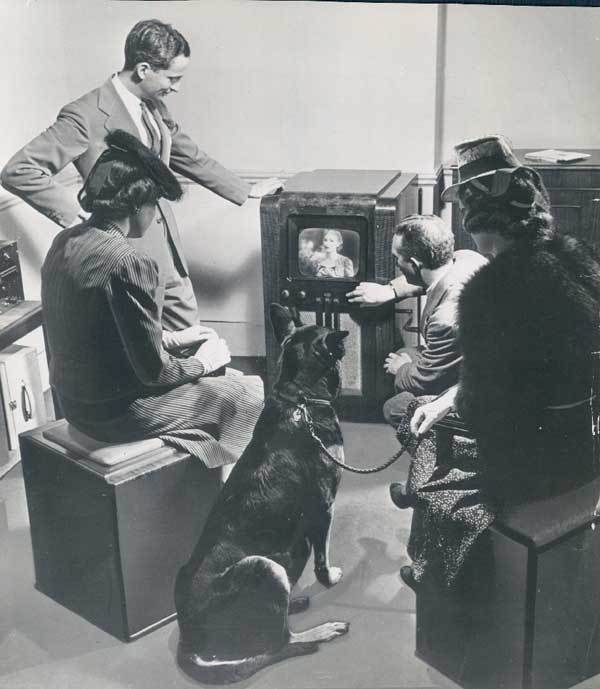
Early Electronic Television DuMont 183X (click on picture for high resolution image)
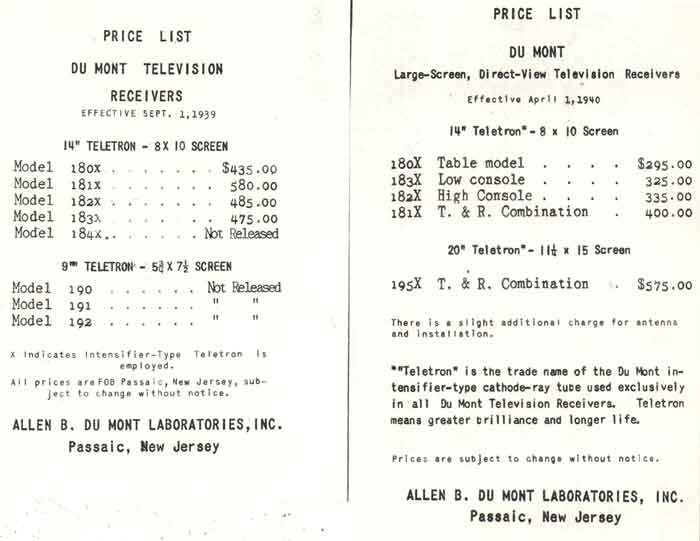
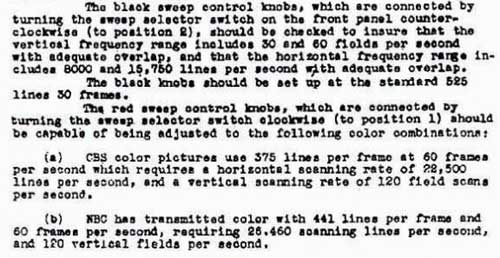
With the exception of the base of the cabinet, this set is in excellent condition. The 183X was first advertised in September, 1939. It used the 14AP4 "Teletron" CRT, which has an "intensifier" anode that produced a brighter picture than the earlier tubes used by DuMont. The X series receivers also have a switch that selects two sets of scan rate controls. When the set was first introduced, the dual controls were apparently used to select between 441 line transmissions from NBC and CBS, and a proposed higher scan rate proposed by DuMont. In 1941 the FCC approved a 525 line standard, and DuMont then suggested that the receiver could be used to watch experimental field sequential color broadcasts:
Froim Rider Volume 13
In 1941 RCA and CBS were both broadcasting experimental field sequential color, using various frame rates. Here is a summary from Ed Reitan's site:
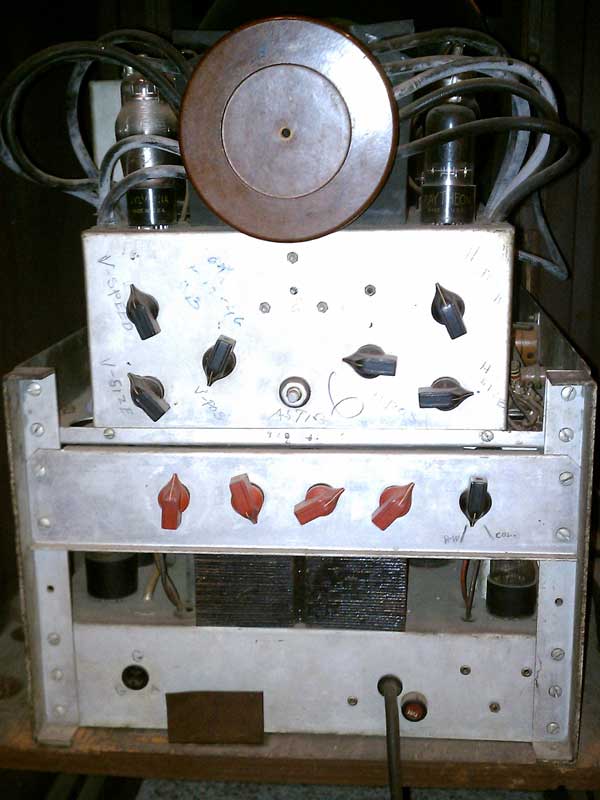
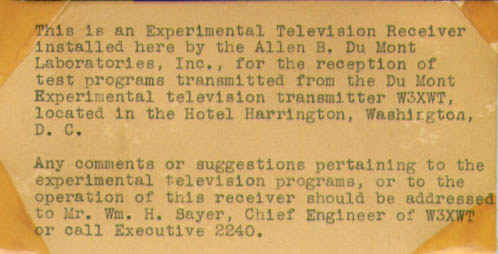
The other surviving 183Xs have the switch located on the front panel, as described in the Rider maual (above). The switch on our set is located on the rear panel, and is marked "B/W" and "Col". It is likely that our set was used in 1941 for viewing experimental color broadcasts (in black and white, of course). After the war, our set was used in Washington, DC, to receive W3XWT. This card was taped inside the back of the set: W3XWT started broadcasting in 1945, but, since no sets were manufactured during the war, this early electronic set was used in Washington. Here is an article about W3XWT.
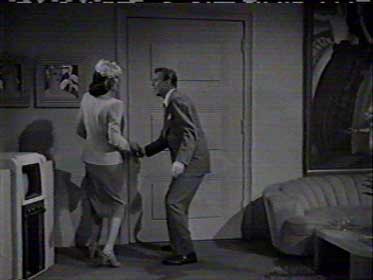
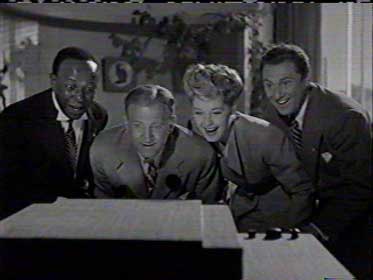
From the 1944 movie "Brewster's Millions". A DuMont 183 has been made to look more modern by the art department. The image on the screen is pasted on.
1939 Press Photo |
||||||||||||||||||||||||||||||