
|
Station KDYL went on the air AM radio
in 1921. KDYL was a luck-of-the–draw government assigned
call. The complete company was sold in about 1953 with the
television call changing to KTVT, KCPX, and KTVX TV. The AM
/ FM was divested along the way. During the time I was Chief
Engineer of KTVX TV (1983 – 1998), I had possession of a
collection of memorabilia dating from 1921 through the
television days. This included scrapbooks, news clippings
and thousands of photos.
This history of KDYL-TV is my
interpretation from this material.
There are hundreds of stories relating
to KDYL Television. The owner of KDYL was a man by the name
of Sid Fox. He was a gambler and promoter and KDYL AM Radio
and Television was one of his tools. Sid obtained his AM
radio license from a newspaper that couldn’t figure out what
to do with it and was on the air in 1921 sharing a
wavelength with two other commercial stations in Salt Lake
City, Utah. There was no FCC at the time and several
stations shared a “wavelength” by going on and off at pre
arranged times. Radio receivers were wavelength not
frequency orientated.
Advertising was Fox’s future and when a
business advertised on his station the station went to the
business. Signs were posted in the store windows pointing
out that this was credible because it was on KDYL.
Fox employed a professional
photographer early on. Through the thousands of pictures and
scrapbooks he kept during the time he was the sole owner of
KDYL, (1921 to 1953) we can read the early history of radio
and television. Click for photos of
KDYL radio.
By the late 1930’s KDYL had become a
huge AM radio empire. They were the NBC radio affiliate and
soon NBC TV.
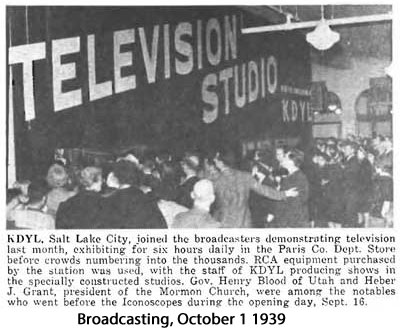
In 1939, RCA did the now famous
introduction of television at the 1939 Worlds Fair (“The
World of the Future”) and apparently did a smaller version
in several (5?) cities across the US including Salt Lake
City. Industrial design / Art Deco was at its peak. The
world was about to change. The “Modern Miracle” was out of
the lab.
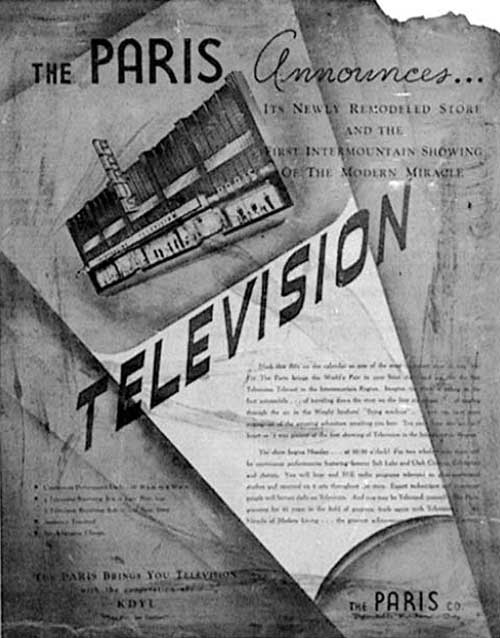
One KDYL Scrapbook contained clips of
full page news paper ads from several US cities. They all
used the same layout except for the name of the store who
appeared to be a big Radio dealer. Other correspondence
indicates RCA was attempting to comfort their radio dealers
that television would not hurt their business. I believe the
date of this clip was October 1939. It was first demonstrated at the Paris
Company store downtown Salt Lake City.
It
appeared to be in operation at The Paris Co. for several
weeks in October of 39.

1939 Salt Lake City
newspaper clip announcing the Paris Co display
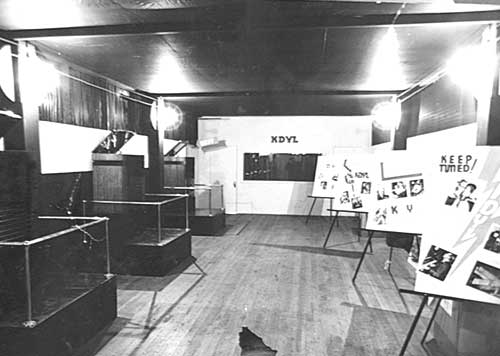
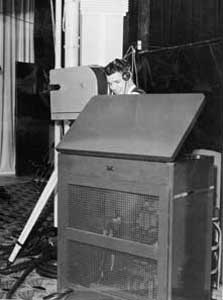
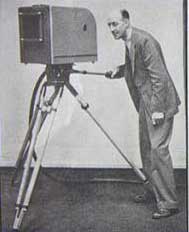
The exhibit appears to have consisted
of at least three TRK-12 TV sets and One Iconoscope camera
with the modified TRK-12 control console.

Three TRK-12s in display
formation

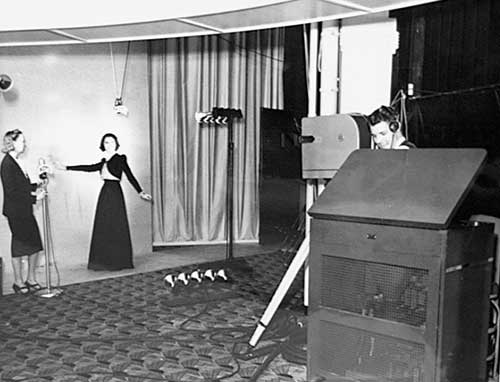
Iconoscope camera and either
TRK-12 or the CCU (notice the industrial cabinet finish) may
have been in the Paris Co demonstration
Here is the camera and modified TRK-12 as it was in 1939
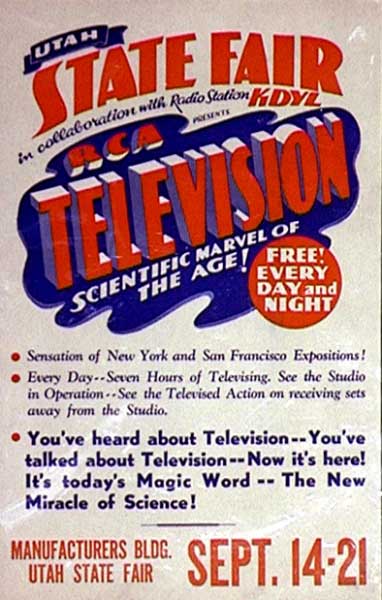
The equipment ended up in the
possession of KDYL where they continued to promote
television at local events such as State Fairs throughout
the 1940’s.
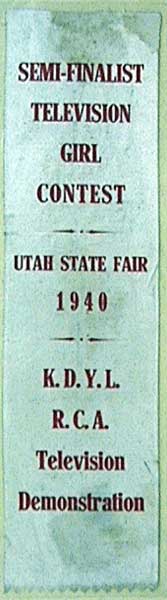
This
poster promoted the continuing life of the 1939 exhibit
Records indicate KDYL had
attempted to obtain an experimental television license as
early as 1944 and finally succeeded in about 1947; going on
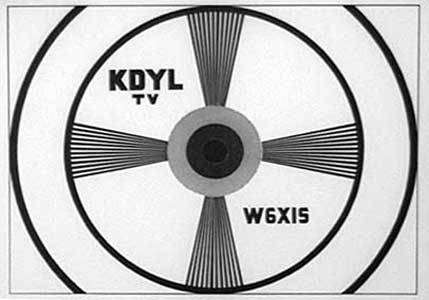
the air as an experimental station (W6XIS) in early summer
1948 on channel 2.

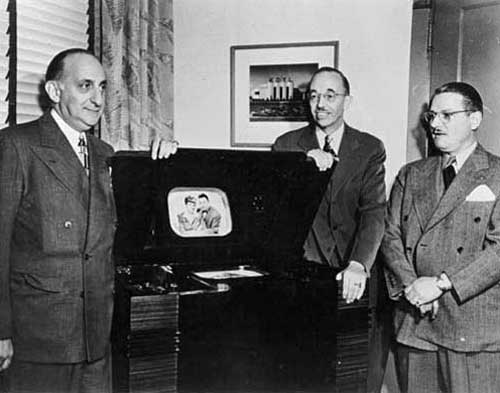
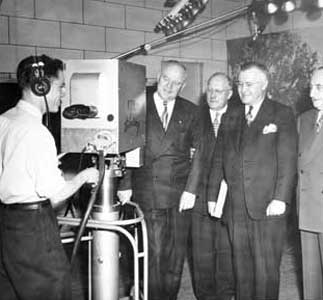
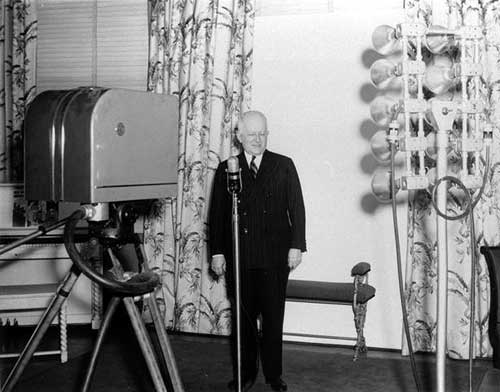
Sid Fox, the owner of KDYL (left); O. B. Hanson, chief engineer for NBC
(center); and an
unidentified man, standing beside a fresh TRK-12 displaying
an actual picture on its screen (could be the one I had)

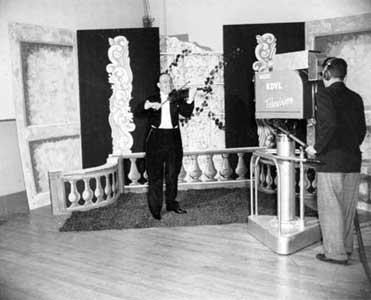
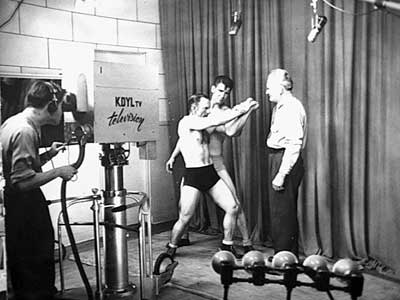
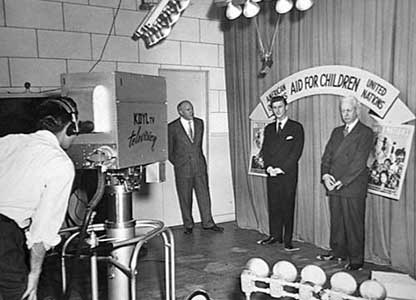
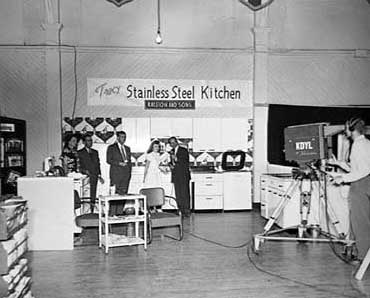
The studio equipment consisted of the
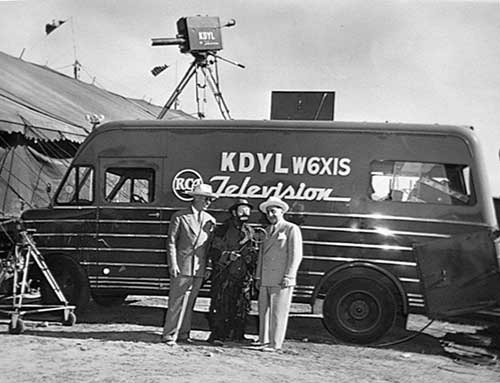
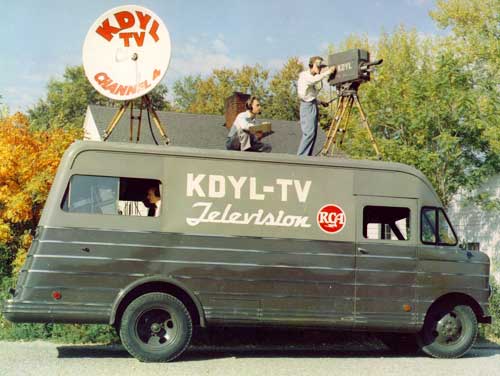
1939 exhibit equipment. They also had a slick new RCA remote
truck equipped with three Image Orthicon cameras and a
microwave link and they televised every happening in the
city. Parades, boxing, store openings, talent shows, live
local news; everything was fair game.

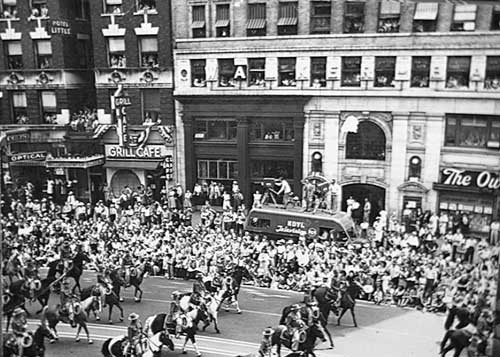
Days of
'47 Parade, July 24, 1948 in downtown Salt Lake City

Emmett the Clown in front of mobile van


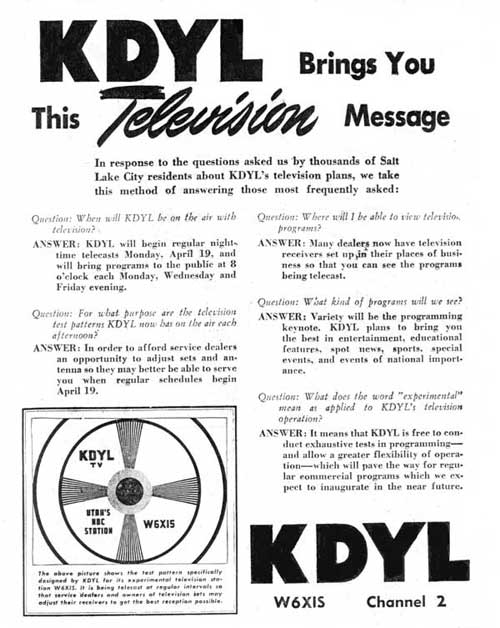
On the air with 100
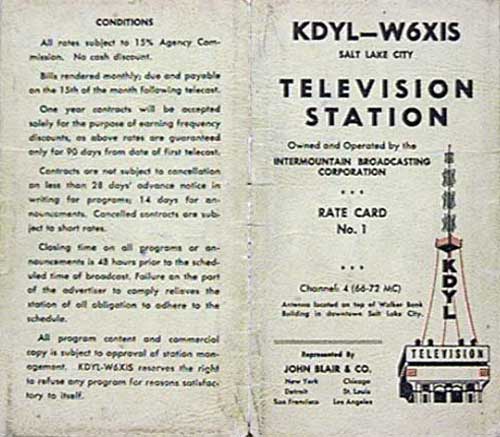
Watts W6XIS / KDYL was ready to sell advertising and had a
published rate card
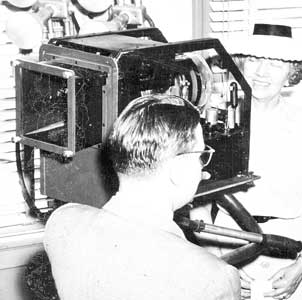
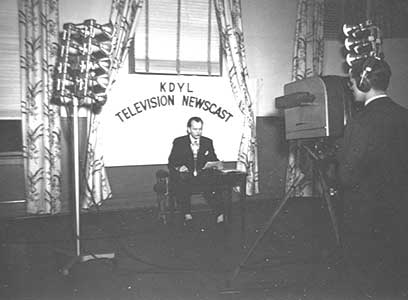
The 1939 equipment as used in the
studio, including two of the 1939 Iconoscope cameras
that started with a gun sight type viewfinder and evolved to a
periscope affair over the top of the camera head. It may be
that they constructed one of the cameras and that RCA may
have sold in kit form. I had possession of some other RCA
equipment that had been built by the station engineers but
appeared to be a perfect copy of a factory built model.
The iconoscope camera in the late 40s (the original
camera didn't have a viewfinder)
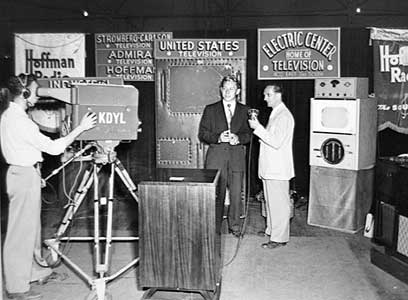
The studio in 1948, with a newer camera
Remote broadcast. Note the U. S.
Television projection set

1947
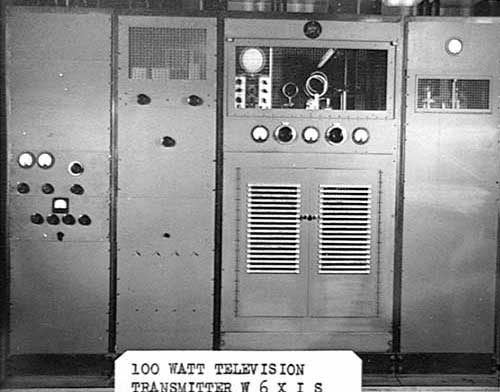
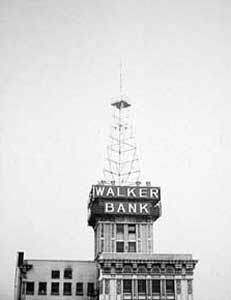
W6XIS, 100 Watt TV transmitter was located at the Walker
Bank Building in downtown Salt Lake City

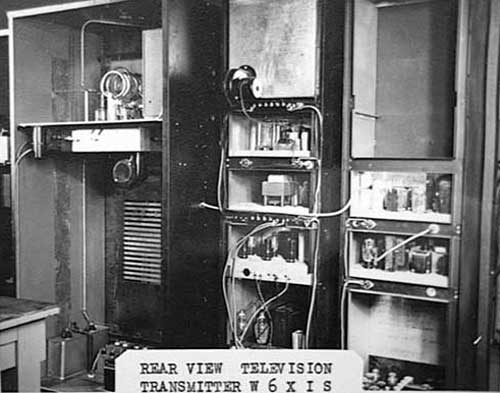
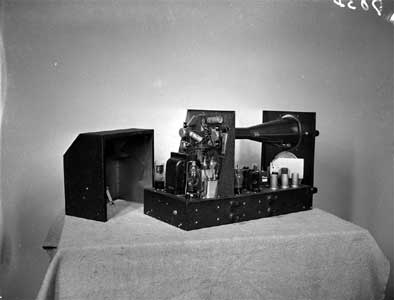
Rear view
of the 100 watt transmitter.
|

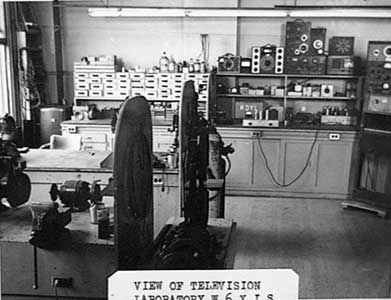
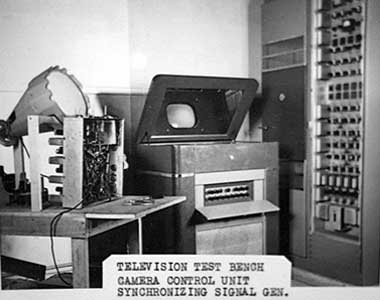
The TV
Laboratory |

Test bench, with RCA sync
generator in background |
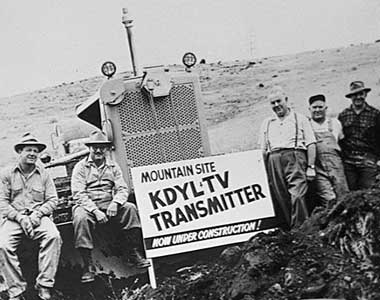
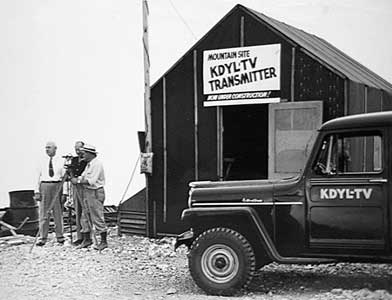
The original transmit tower was on the
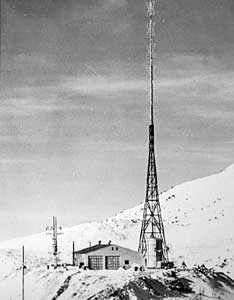
top of the Walker Bank building, downtown Salt Lake City. By 1953 A
transmitter site was constructed on an 8,000 foot peak west
of Salt Lake City they named Mount Vision (still used as a
backup transmitter site to this day).

Sid Fox wanted to know where the peak
was so the engineers left a spot light on one night during
construction. Fox seized the publicity value and had it lit
permanently.
The first Mount Vision TV transmitter
was an RCA TT-5 which is still installed at the site.
The old Walker building tower remained
on into the 1990’s and was illuminated with neon. It changed
color to reflect the predicted weather. After the final
caretaker of the weather lighting died the tower was finally
removed.

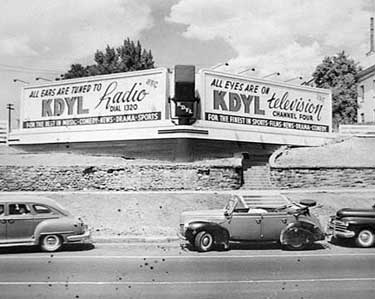
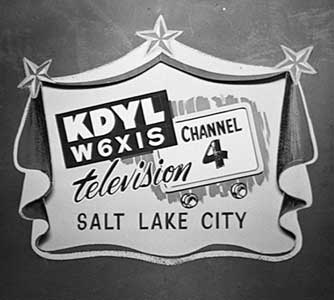
KDYL/W6XIS
moved from channel 2 to 4 early in its history
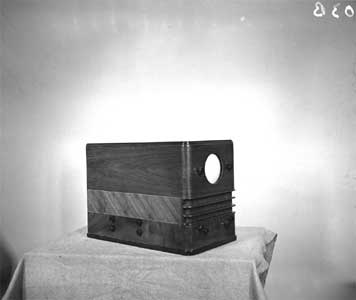
During the 1960’s a friend of mine had
spotted the sole remaining TRK-12 in the lunch room at the
KDYL studio then KCPX-TV, abandoned in the corner with a dim
picture tube. He acquired the set and a spare TRK chassis
set from the station. In 1973 he joined the military and
gave me the TRK-12 to keep or pass on. Stupidly I passed it
on. The chassis won a contest sponsored by RCA in the 1970’s
to find the oldest surviving RCA TV set; I believe the
complete TRK came in second.
All the pictures are from the KDYL
collection.
|