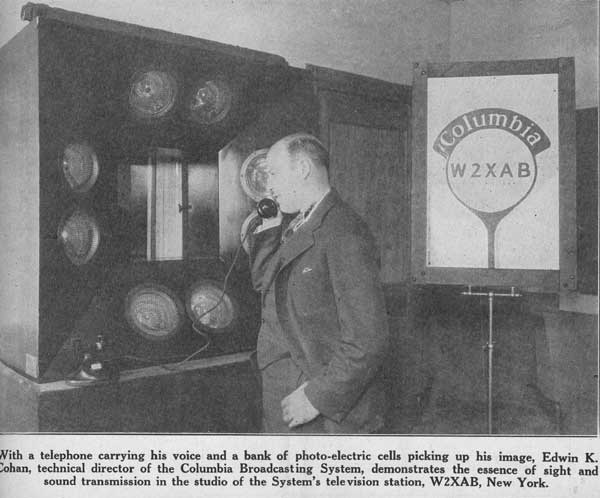
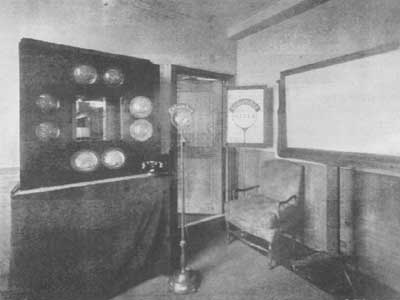
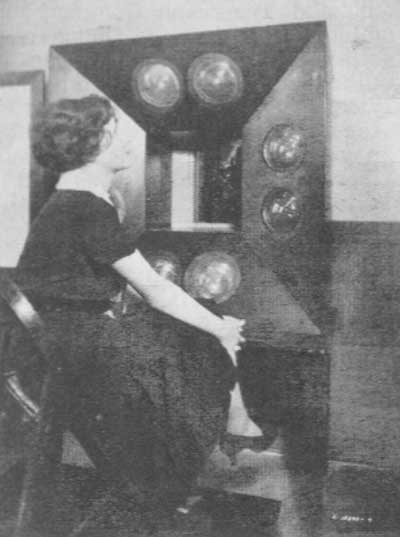
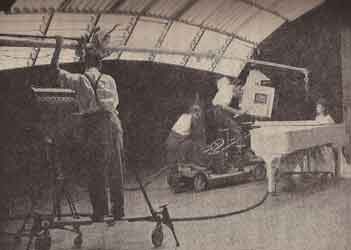
The W2XAB studio, showing the photocells and a microphone. The
scanner is in a separate room behind the hole in the middle of the
photocells.
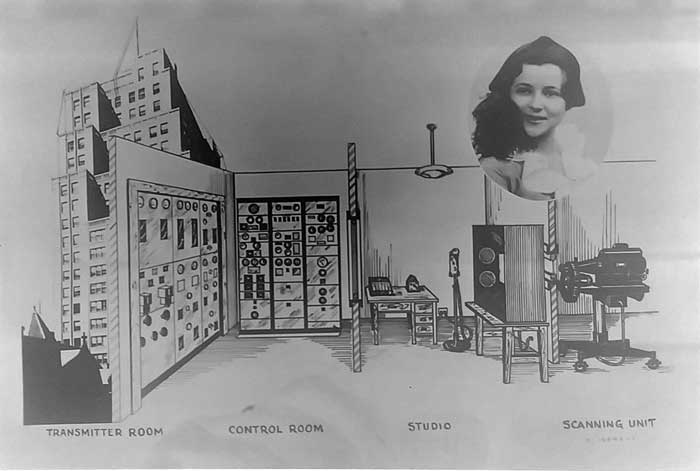
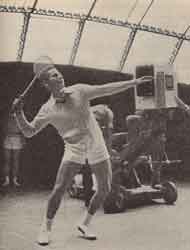
The
camera, with Natalie Towers in front of it
Glass photographic plate from about 1931
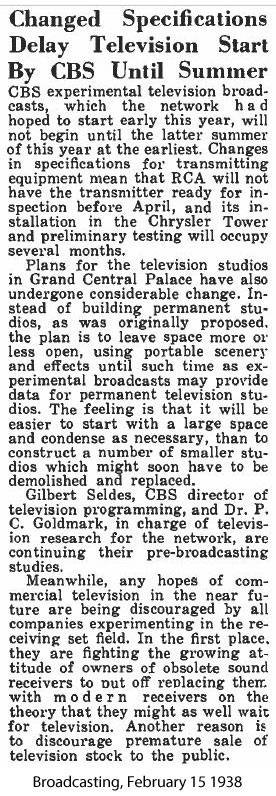
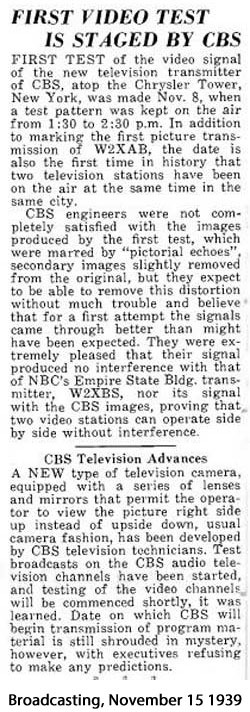
Electronic Television
In 1937 the station began broadcasting
electronic TV on channel 3 as W2XAX.. In 1941 the call sign was changed to WCBW,
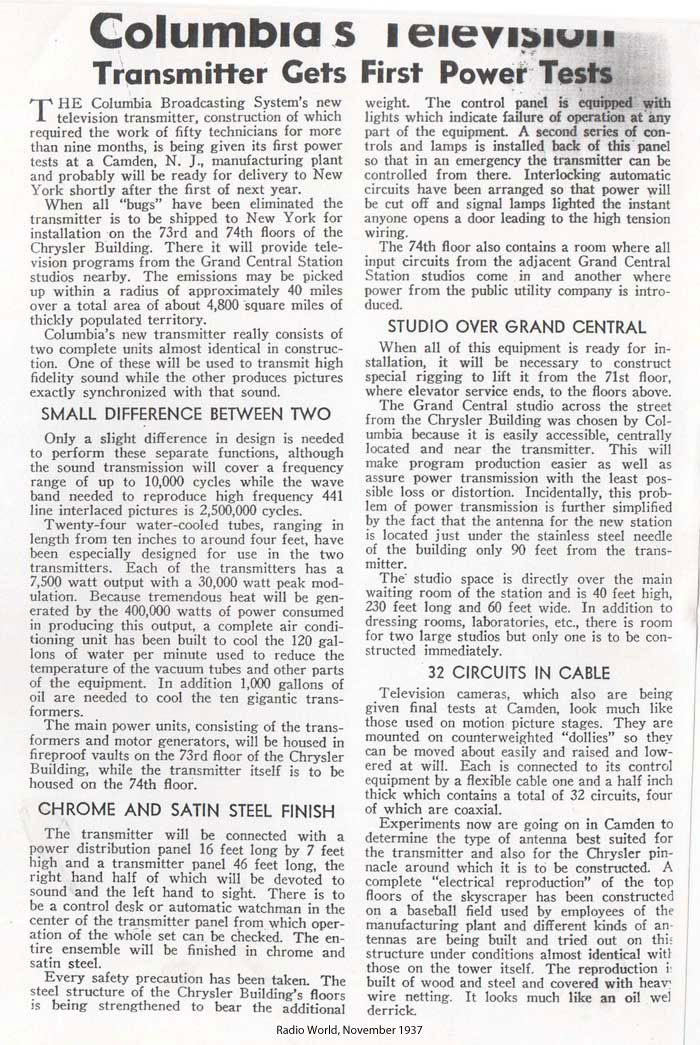
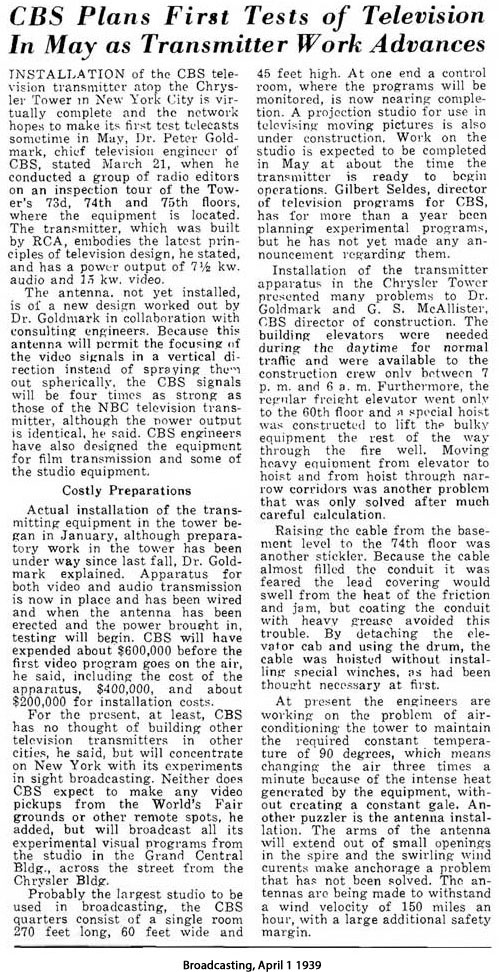
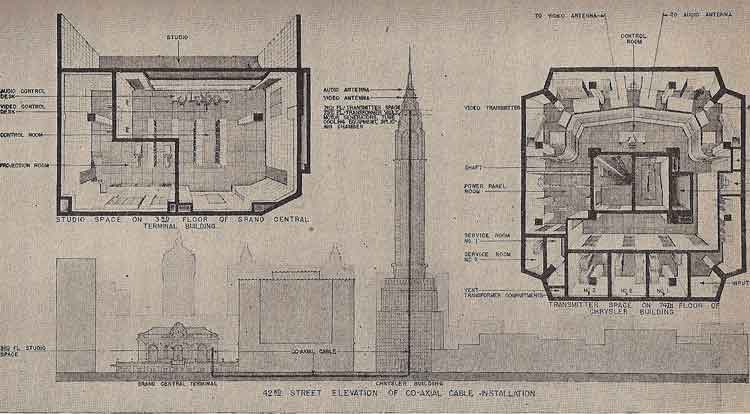
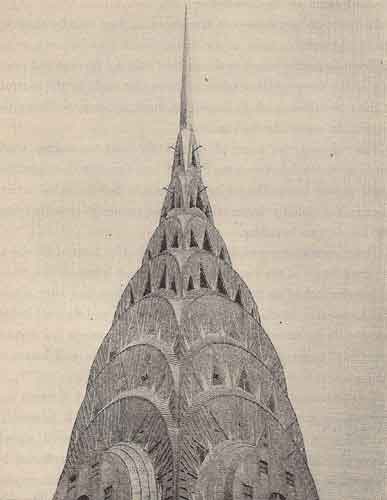
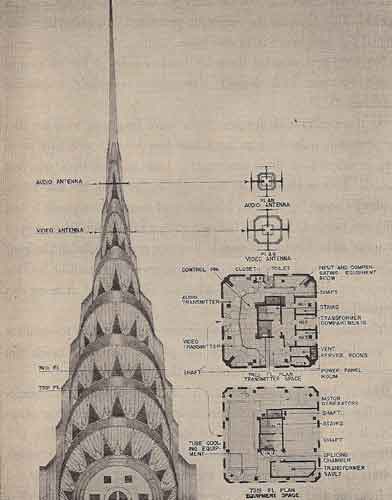
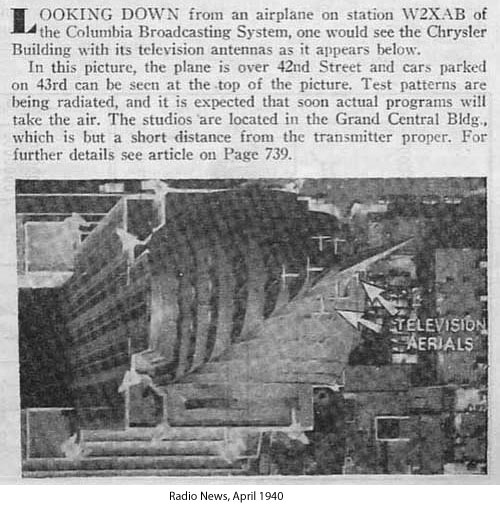
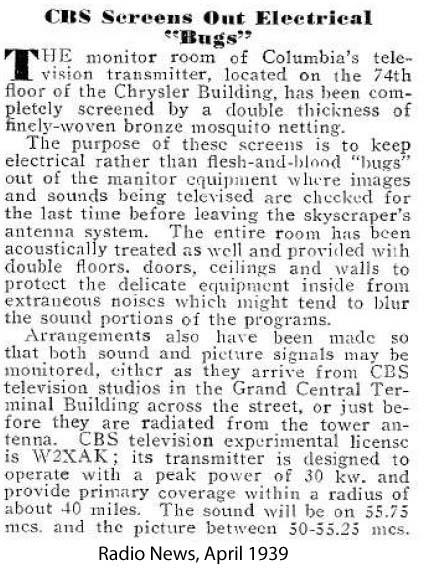
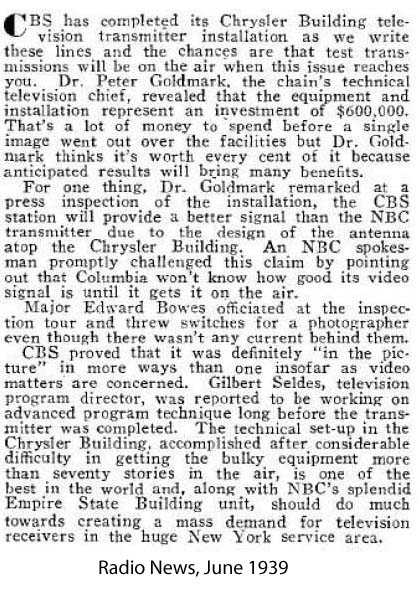
and after the war, it became WCBS. A transmitter and antenna were put
on the Chrysler Building in Manhattan, while the studios were located in
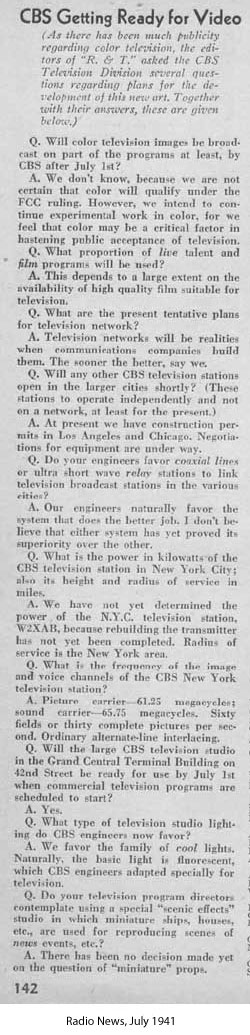
the Grand Central building.
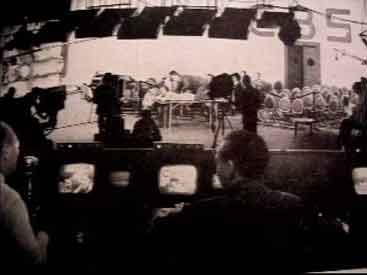
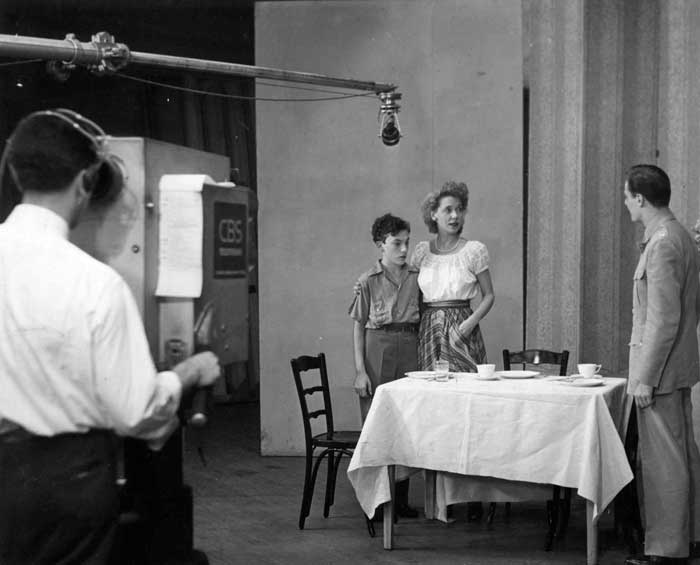
Worthington Miner, left, directing. Notice the huge number of
fluorescent lights directly over the set
Courtesy of Steve Dichter
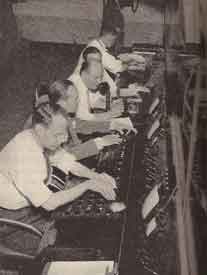
The control room in 1941 control room, with pioneer CBS director
Worthington Miner, center, at the microphone
Courtesy of Steve Dichter
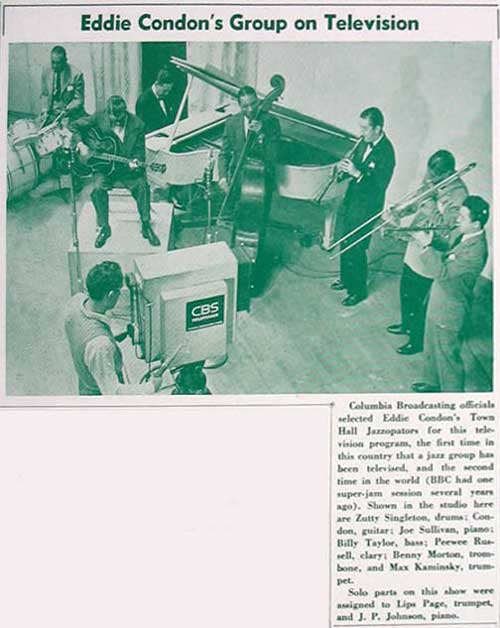
First U.S. broadcast of a jazz group on W2XAB (1939)
Courtesy of John Pinckney
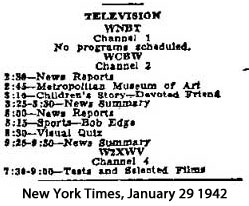
Program schedule for Jan. 29, 1942
Television programs of the Columbia Broadcasting System go on the air Thursdays over WCBW on channel 2. Test patterns from 7:30 to 8 o'clock are followed by films until 10 P.M. This schedule will be continued indefinitely, according to director Worthington Miner, as long as the available materials and manpower hold out. Technical manpower shortages, he said, are the most pressing need and will determine WCBW's future.
For those who have home television receivers not in operating condition, the service outlook is "something less than bright." Skilled men are not available to "fix" ailing sets; neither are replacement materials. It is therefore estimated that the 1,000 to 2,000 receivers now inoperative in this area are likely to remain so indefinitely. This is the only "bad" news current in television circles.