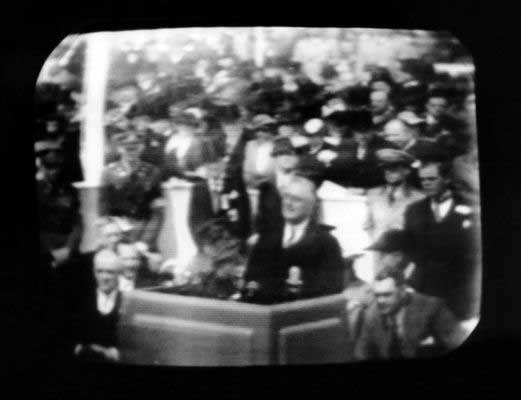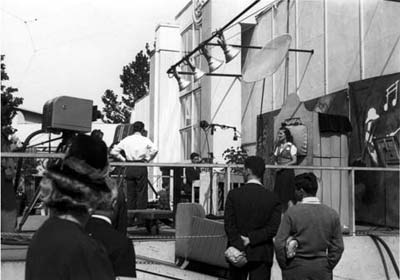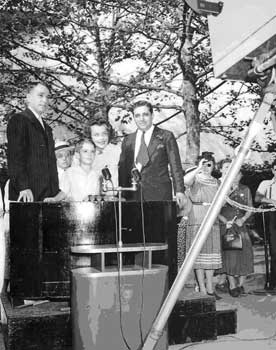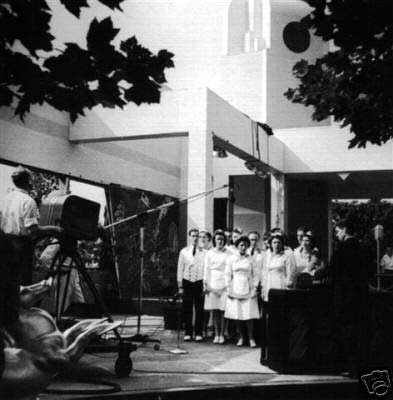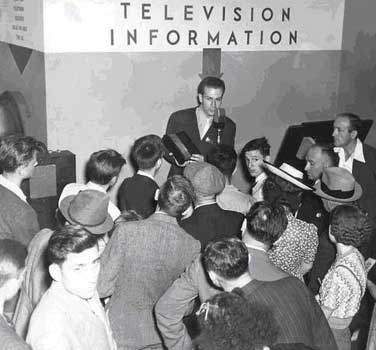

Early Electronic Television The 1939 New York World's FairRCA introduced television to the American public at the 1939 World's Fair. Before the fair, they published a brochure for their dealers to explain television. The opening ceremony and events at the fair were televised, and NBC began regularly scheduled broadcasts. President Franklin Roosevelt dedicated the fair, thereby becoming the first president to be televised.
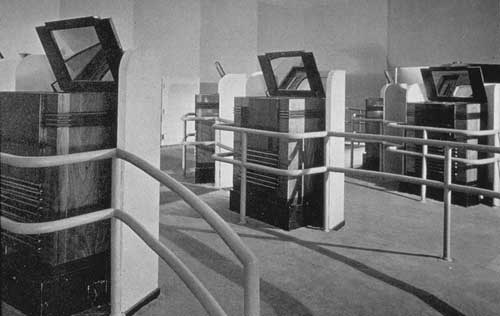
TRK-12s were on display for viewers to see television. These sets used voltage doublers to power the CRTs with about 10 kv to produce a brighter picture than the sets sold to the public.
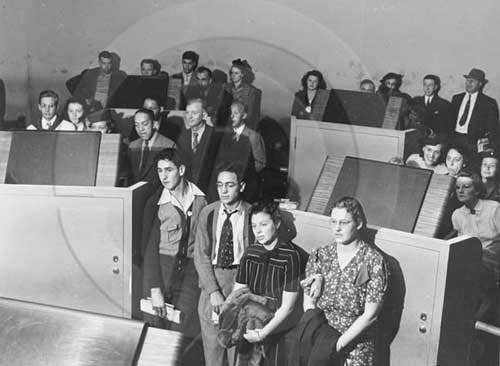
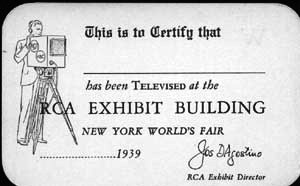
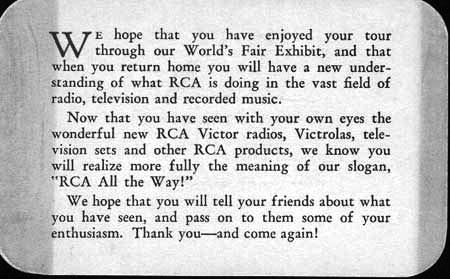
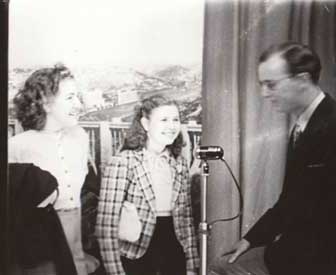
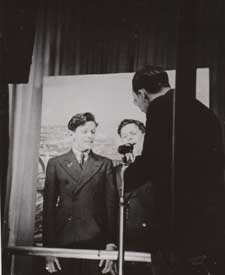
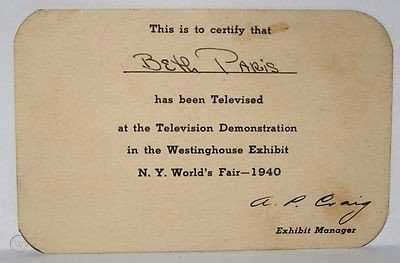
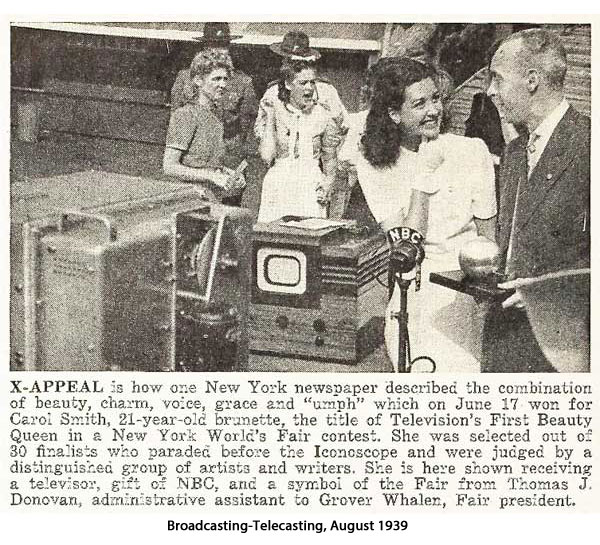
In order to convince skeptical visitors that the TV set was not a trick, one set was made with a transparent case so that the internal components could be seen. As part of the exhibit, visitors could see themselves on television, and were give a card documenting the event.
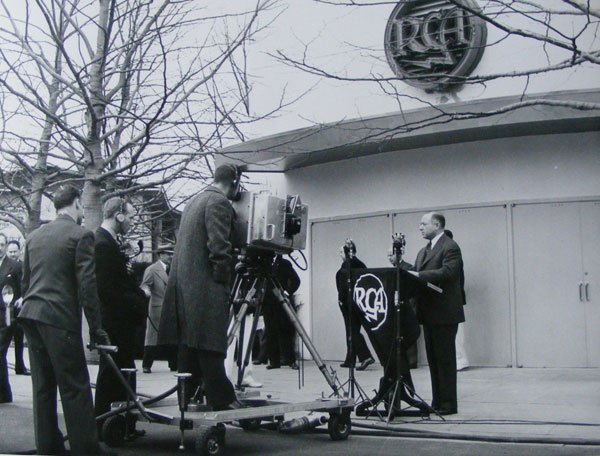
David Sarnoff dedicating the RCA building
Other manufacturers had television demonstrations, including General Electric, which demonstrated its own sets; ; General Motors, which had a picturephone on display, and Crosley, which demonstrated DuMont sets and a DuMont camera. Westinghouse, which had sets on display made for them by RCA, also had a RCA camera where visitors could be televised.
The following is from "Television in the World of Tomorrow", by Iain Baird, ECHOES, Winter, 1997:
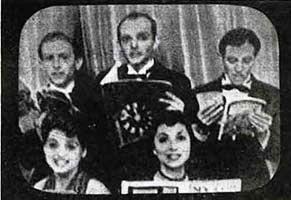
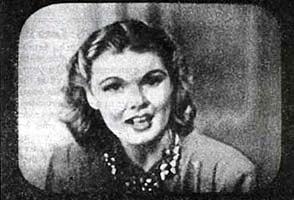
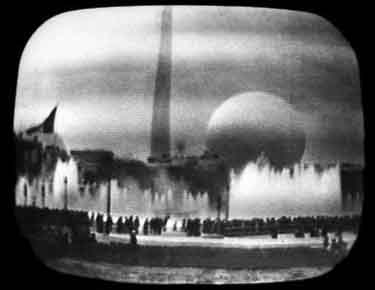
These pictures of the screen of a TRK-12 were taken in 1940 of NBC programming. Courtesy of Tom Genova
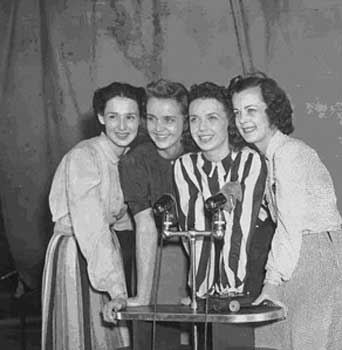
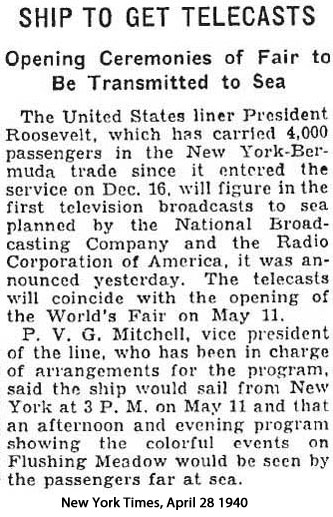
A photograph of an early telecast from the 1939 Worlds Fair Stanley Jay, an early Columbus, Ohio television experimenter, took photographs of programming at the fair. Dan Fleming, a West Virginia resident, spent much of the summers of 1939 and 1940 at the fair, where his father worked. Another family recorded a 78 rpm disk at the fair. A woman in Portland, Oregon sent us this account of her father at the fair. Here is a short film showing the RCA television pavilion. The Fair continued in 1940. RCA put television receivers in the ocean liner President Roosevelt, so passengers could watch the opening ceremonies on May 17:
Here is a television camera of the type used at the fair. Here are short film clips of the camera outdoors courtesy of Dave Sica.
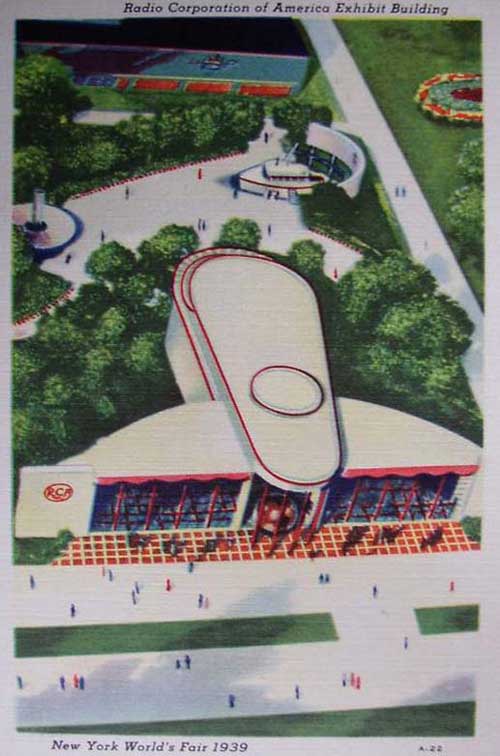
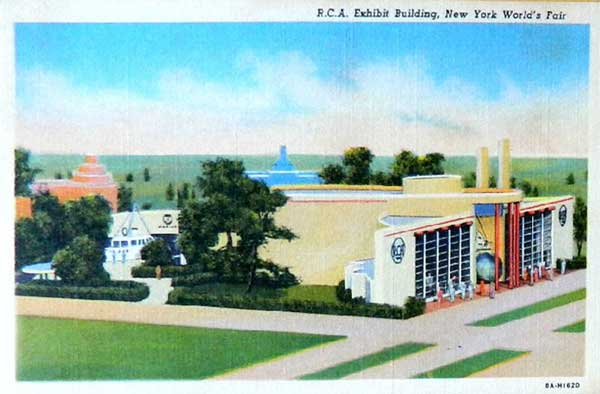
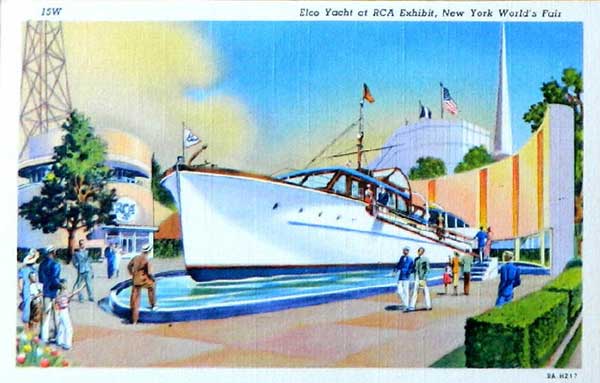
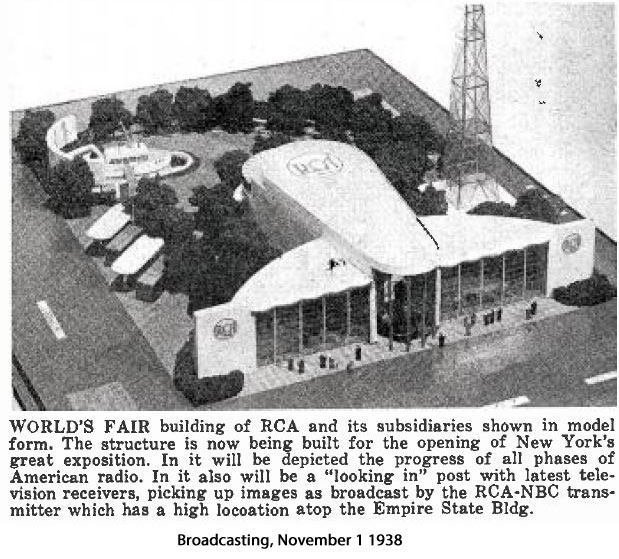
Here are postcards showing the RCA building, which was shaped like a vacuum tube
|
||||||||||||||||||